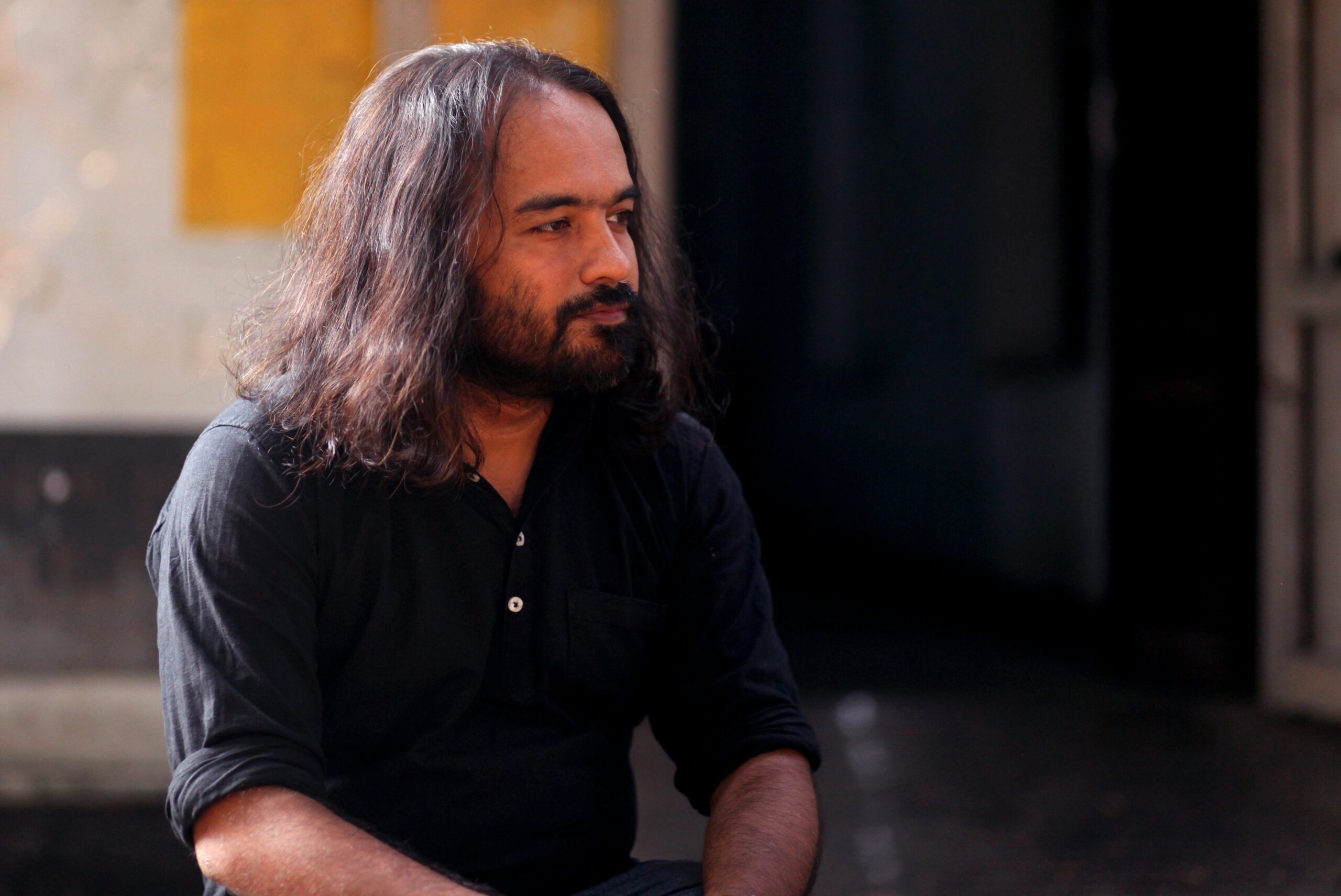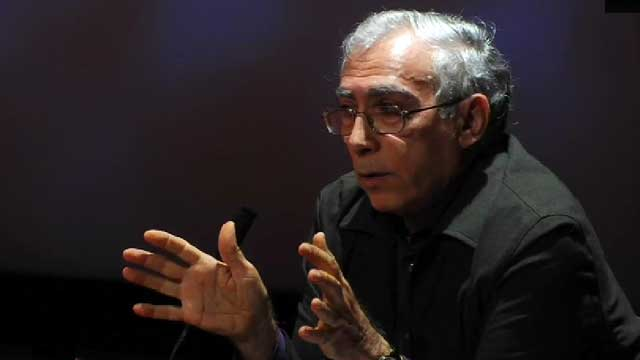
When we sat down with Kanu Behl on the day Agra opened in Indian theatres, it was after his angry tweets about not getting enough screens had already begun to travel. In that conversation, he said there was “a pressure cooker that was building up” and that “everyone was feeling this tight lid on things.” It already felt, then, like one of those moments that might precipitate something bigger.
Fortunately for Indian independent cinema, something bigger has precipitated. The Independent Filmmakers Association of India, or IFAI, was launched publicly at Cannes this year as a not-for-profit collective aimed at improving theatrical access, distribution pathways, streaming visibility, and institutional support for Indian independent cinema. Public reports place its early membership at more than 120 filmmakers and producers from across the country.
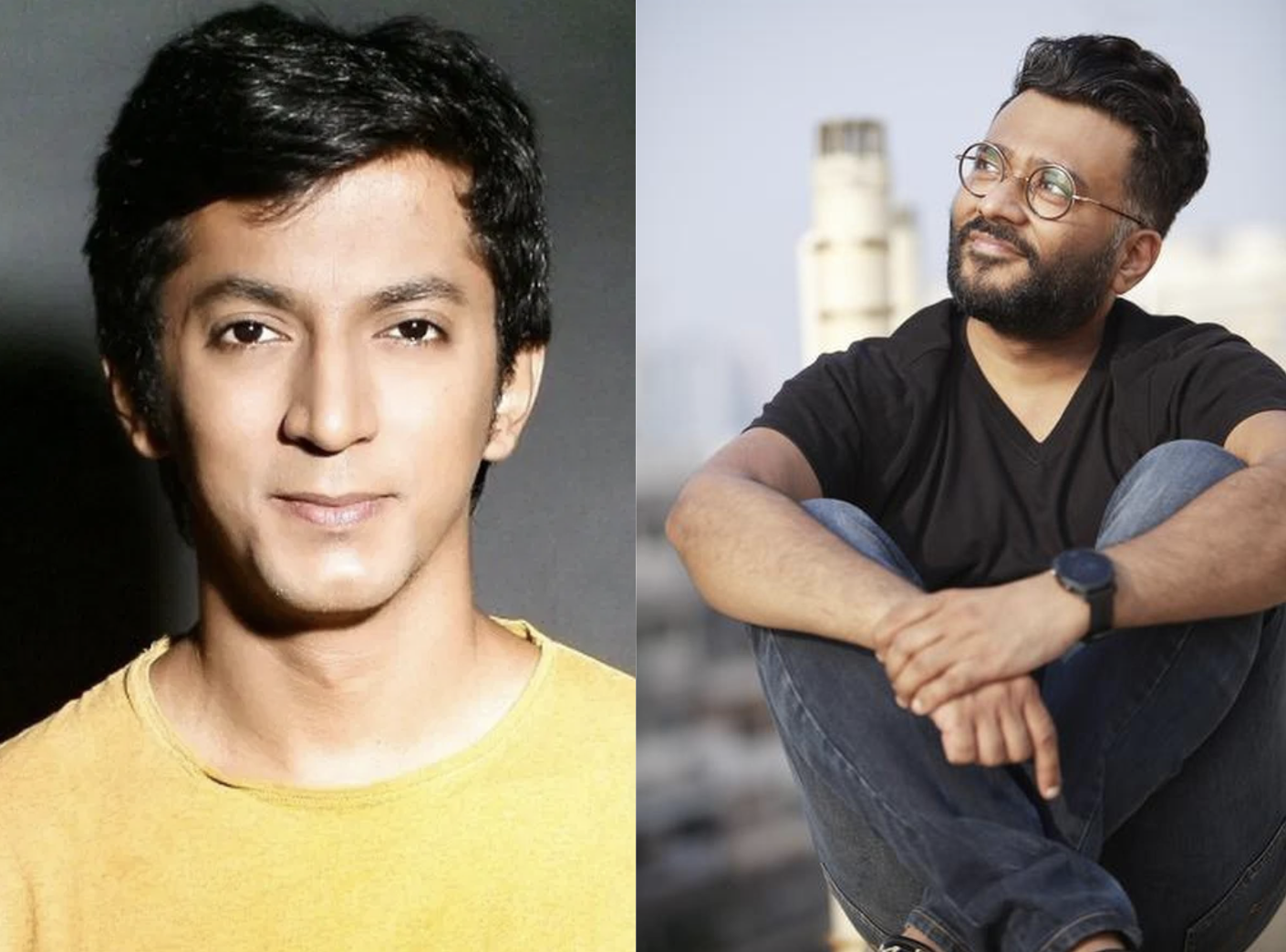
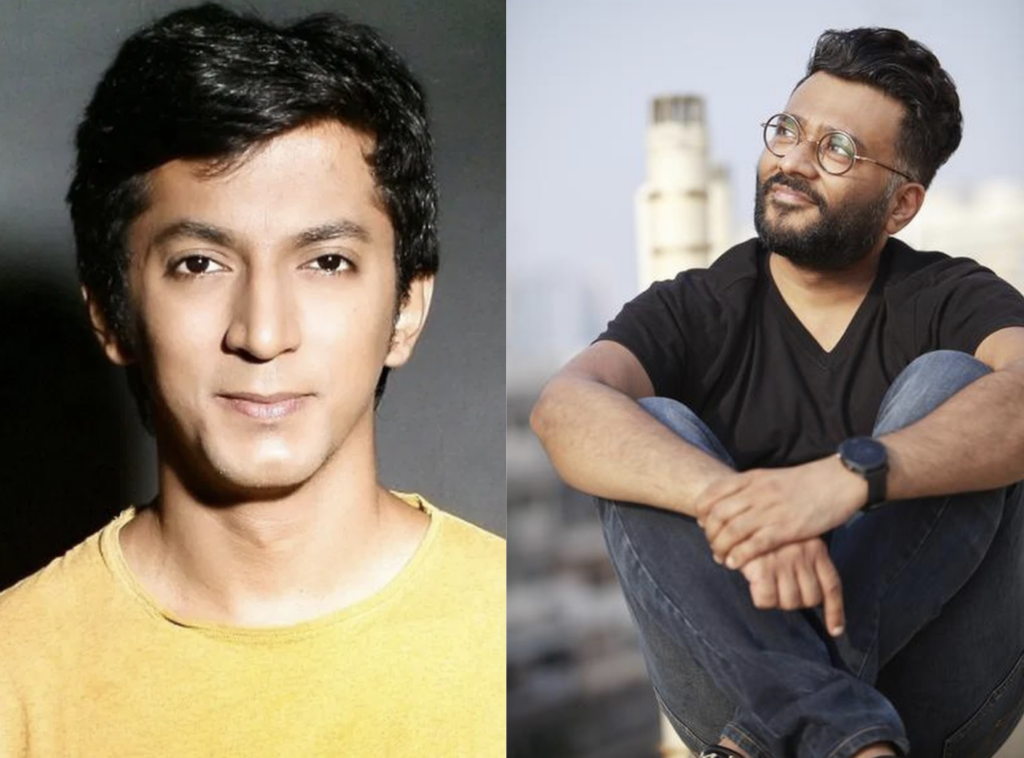
For The Last DVD, Abhinav Jain spoke to Anshuman Jha (Lord Curzon Ki Haveli, Lakadbaggha) and Sudhanshu Saria (Loev, Ulajh) about the distribution crisis that made such a collective feel necessary, the larger structural problems facing Indian independent cinema, and the kind of system IFAI hopes to build in response.
What follows is an edited transcript of that conversation.
[ABHINAV]
When Kanu Behl spoke to us during Agra’s release, he said the walls were closing in. It felt like the anger had begun to organize itself into something structural. Was IFAI born at that moment, or had this been building for much longer?
[ANSHUMAN JHA]
Agra was a tipping point. IFAI was not made just because of Agra. All of us have been struggling with this individually and as a community for a while.
On the Friday morning Agra was released, Kanu and I got on a call. He said they couldn’t get screens. Since I had just released Lord Curzon Ki Haveli, he asked if there was any way I could help get them some screens in Bombay. I told him programming happens on a Monday. By Friday, it is already too late. We still tried. I called people, and they finally managed to get two shows.
But the broader question is one I have personally been struggling with for ten years: distribution for non-mainstream, non-star-driven films. Agra gave us a trigger point. Kanu initiated it, we all got together, and the process of putting IFAI together began from there.
[SUDHANSHU SARIA]
I started my career in distribution. The first half of my career was in the US, where I was working on boutique film releasing with companies like ThinkFilm. There, there is a healthy parallel economy for non-mainstream films. There is an audience for it, a different release mechanism, even an awards circuit that supports it. You can build a career in that ecosystem.
When I first came to India, the big issue everyone pointed to was piracy. The feeling was: either you go big or you do not do it at all. But that question has changed now. With platforms and so much content available for free, the real question is desirability. Is this something people want to watch? And if they do, how do we bring them to it? In that sense, the system is not really built to care. It is built to sustain itself. So as filmmakers, we have to come together and demonstrate that there is a hunger for this work and that there is a way to build around it.
[ABHINAV]
A single filmmaker can write an angry tweet. A petition can gather signatures. What can a collective do that those things cannot?
[SUDHANSHU SARIA]
One of the big things it can do is collect institutional wisdom. IFAI now knows what Anshuman knows from releasing Lord Curzon Ki Haveli. It knows what Kanu knows from releasing Agra. It will know what Alankrita Shrivastava knows from releasing Lipstick Under My Burkha. It knows what I know from releasing Ulajh, from releasing Loev, from releasing the films I have put out there.
So suddenly we are sitting across from a table and it becomes a deep repository of how the system works: the people we know, who we talk to, how we position a film, how not to make a mistake. I am getting ready to release a film my company has produced outside the system, and it is wonderful to be sitting around the table from people who have done this before. To have access to a membership of artists who have persevered for decades, and to feel that each of us is bigger together, is already a huge win.
[ANSHUMAN JHA]
For me, the biggest challenge and responsibility of IFAI is opening doors for younger filmmakers so that they do not face the challenges we did. If, in the long run, we can use our collective wisdom to set up a practical system, that would be the biggest success of the union.
There is a real lack of education around distribution. A lot of younger filmmakers think the job is done once the film is made. It is not. You have to know who the film is for, how it is going to reach them, and what is actually realistic. With Lord Curzon, for example, we did not say we would release it in a hundred screens. We handpicked sixty-nine screens where a film like that could genuinely work. If a model like that can be documented and shared, then the bargaining power and the knowledge pool become vast for everyone.
[ABHINAV]
How does that become tangible in the theatrical system? What changes if you have a collective voice instead of a one-off film fighting for survival?
[SUDHANSHU SARIA]
Collective bargaining does work. One-off negotiations are very hard. There is a reason exhibitors like talking to studios: you figure out one relationship and it gets you a slate. You get a steady stream of films that can offset one another.
I do think the films our members make are important for the culture and for the zeitgeist. They document what is happening in our times. But unlike other countries, we do not have taxpayer-supported systems for art. So in our own way, IFAI has to begin those conversations: with the government, with exhibitors, with everyone else in the chain. Not for one film that comes out on one Friday and is gone, but as a dependable stream of films. If we can say to exhibitors that every month we will deliver a film, then suddenly you can ask different questions: why must all our films open on Friday? Why not Tuesday? Why not unusual slotting? Why can we not enter a more dynamic process when screens open up unexpectedly? Those conversations happen only when many voices come together.
[ANSHUMAN JHA]
At the end of the day, the exhibitor is dealing with business. We are passionate about making a film, we put our blood and soul into it, but when we go to a commerce-driven mind, we have to respect that cinema is art and commerce.
Which is why I openly say that marketing and distribution is filmmaking as much as filmmaking is filmmaking. A distributor said this to me very clearly: in one theatre Lord Curzon was doing thirty-eight percent, in another theatre it was doing six. The other mainstream film was doing eighteen. So of course they would remove the weaker show and keep the stronger one. It boils down to that.
So yes, we need to crack the system in the long run. But in the short run, we also need a way forward together, one that is followed up on and dynamically evolved because the ecosystem is changing every year.
[ABHINAV]
On that question of getting people into theatres, I keep thinking of Mai Wapas Aaunga. I watched it on its first Friday, and the numbers looked weak. Then word of mouth seemed to carry it into bigger weekends. When that happens, do you notice any pattern at all? Do these films need to land with a particular emotional force, or is that exactly the wrong way to think about it?
[SUDHANSHU SARIA]
I feel like the moment it becomes money, that is when it is over. You cannot game the system. You have to have a heart. You have to be vulnerable. You have to speak your truth and make a film for an audience of one.
That, to me, is where our members excel. Every time you try to monetise or algorithmise art, where has it gotten you? The frustration of capitalism with art is that it cannot make a repeatable product. Management and MBA logic is always trying to reduce risk, make things predictable, get to profitability faster. But that has never really been how meaningful work survives.
[ANSHUMAN JHA]
Also, just going back, there is no formula. When LSD released, its first week was weak. In the second week, we were finally let loose, sent on city tours, and the film ended up doing more than twenty crores on a two-crore budget. A two-crore film making twenty crores is, in pure math, a much bigger success than a hundred-crore film making a hundred and fifty.
The simple logic of films like Sabar Bonda or Humans in the Loop doing the numbers they have on limited screens is that there is an audience for this work. We need to figure out how to reach them. More importantly, the films that do connect usually have a very clear vision of who they are for and how they are going to be mounted. That is where the producer comes in.
Good producers are the root of a film, because they do not just raise money. They understand where the film is going to land. That is one of the biggest contributions IFAI can make in the long run: create good producers. Ownership matters too. I own all my films, and that empowers me. It allows me to decide how I want to take them forward, and it allows me to sit across from a studio head without begging. Similarly for IFAI, it cannot be about one film. It has to become a spectrum over twelve months. That is where larger bargaining power comes from.
[ABHINAV]
The reason I am asking is that it takes me to OTTs. One of the things Kanu said very bluntly was that OTTs have become formulaic. He was also the first person to put this second-screen idea to me — that a lot of these films are now being shaped by the assumption that people are half-watching. How do you think about the difference between something that belongs in theatres and something that belongs on OTT?
[ANSHUMAN JHA]
I will give you a very practical example: 12th Fail. Disney Hotstar had offered a direct-to-digital deal, and Vidhu Vinod Chopra refused because he wanted the film in theatres. He knew what he had made.
The reason I keep returning to that example is that if 12th Fail had gone to OTT first, the first act might not have survived the second-screen experience. In a theatre, once you have paid to watch a film, you stay with it. You give it a full chance. I saw people clapping in the third act. Would that have happened on OTT? Maybe not.
That is the reality of the second screen. Producers are being told to make things easier to understand so that if someone goes into the kitchen and comes back, they can still catch on. So a large part of the conversation is not OTT versus theatre in the abstract, but understanding what you have made and why this is a theatrical film or why this is an OTT film.
[SUDHANSHU SARIA]
I wish it were always as strategic as that, but for me it has often been more about taking what you can get. If I had thought too much about the outcome when I was making Loev, that film would never have been made. So for me it was: make the film honestly, and then figure it out.
When we started that process, the concept of releasing a film like Loev in India was almost non-existent. Netflix did not exist here. Prime Video did not exist. There was no OTT ecosystem in the way we understand it now. We had a release strategy in mind through festivals and international circulation, and some of that worked, some of it did not. Then Netflix entered at that moment and Loev became their first title with worldwide exclusive rights. That was timing as much as strategy.
With Ulajh, I saw the opposite. I was working with a bona fide theatrical studio that did not believe in OTT first. Even though there were obvious business reasons why the film could have gone that way, they kept the faith and soldiered on. So yes, there has to be strategy, but there also has to be flexibility. The system changes, the audience changes, and by the time your film is ready, the whole landscape around it may have changed.
[ABHINAV]
I want to move away from logistics for a bit and ask about the filmmaker’s psychology. What does it do to a person to make something earnest and personal, and then watch it struggle for survival? How do you keep the conviction alive?
[ANSHUMAN JHA]
I will have a spiritual answer to this, because that is my personal truth. I grew up playing a lot of sports. What sports taught me was that the end result is by the by. It never brought me the joy that practising a particular shot and nailing it in the nets did. So for me, I either win or I learn.
A lot of it comes down to the kind of personality you have and the choices you make as a human being. Those choices affect your artistic life directly: your collaborations, your process, your discipline, your lifestyle. For me personally, a structured lifestyle and a clean thought process are the base.
When something reaches out to me, I try to honour it. If something calls to me, I make time for it. Why? Because I have not filled rubbish in my system, in my body, in my mind. If your thought, speech, and action are aligned, there is a certain balance and power in that. That, personally, is what keeps me going.
[SUDHANSHU SARIA]
I do not know who got into this to make money. I think we got into this because other filmmakers affected us. Their contribution to culture, the way they made us feel seen, the way they made us re-evaluate society and the value of our times — that is what inspired us.
So yes, the calling has to be very strong. It is not up to you to control the audience fully. You have to march to your own beat. There is no straight line to it. The films I am doing right now, I may have a strategy for them, but life makes its own plans. The country changes, the system changes, the format changes. Your job is to stay open and aware enough to catch what the work needs next.
[ABHINAV]
MAMI cancelled its 2025 edition for the first time in twenty-eight years. Around the same time, IFFI launched India’s first AI film festival. It is difficult not to read that as a strange picture: key spaces for cinema shrinking while institutions pivot elsewhere. Does that make IFAI feel more urgent?
[ANSHUMAN JHA]
Cinema institutions thrive when they are led by people whose first instinct is a love for the art, not just the business of it. Commerce is essential. It keeps the ecosystem alive. But it should follow passion for cinema, not lead the way.
As for AI, I see it as a tool, not a storyteller. It can enhance filmmaking, but it cannot replace the human experience, empathy, and lived emotion that great cinema is built on. That is precisely why organisations like IFAI matter. They are about creating spaces where filmmakers, audiences, and the art itself remain at the centre of the conversation.
[ABHINAV]
A lot of the discourse around IFAI has centred on Hindi independent films. But Tamil, Malayalam, Marathi, and other regional cinemas have their own ecosystems and their own crises. Is IFAI built for all of that?
[ANSHUMAN JHA]
Absolutely. IFAI is a pan-India movement. All regional languages, filmmakers from all regions of the country. We already have more than 120 members from across India. One thing we are very consciously doing is not making it Bombay-centric or Hindi-centric.
The same challenges, if not more severe ones, are faced by someone sitting in the northeast, or someone working in Malayalam cinema, or somewhere else entirely. That is one of the agendas of IFAI as a pan-India operation: to be democratic, inclusive, and member-driven. Not just an umbrella, but a space for co-learning, education, and exchange.
[ABHINAV]
You represented IFAI at Cannes. What was the international reaction like? Do foreign buyers and festival programmers understand why Indian indie cinema needs a collective, or does it read differently to them? And on the same note: why Cannes for the launch, when it is such a long way from the multiplex in Bhopal that will not give Agra a screening?
[ANSHUMAN JHA]
Because we are not just trying to create a distribution system in isolation. We are also trying to learn from countries where systems like this have worked over decades. We met the CNC at Cannes and were hoping for a strong collaboration in learning from them and in trying to push through IFAI’s objectives for indie filmmakers.
Cannes gave us that international platform. And the reaction was very positive. We had long meetings with people who were thrilled that something like this was happening. Some of the biggest distribution houses we met told us they had been waiting for something like this.
The point is not that launching at Cannes magically solves a screen problem in Bhopal. The point is that if the kind of cinema we make is good enough to travel to Cannes or Berlin or Toronto, it also deserves the kind of international thinking and international distribution structures that other countries have managed to build. We are saying to the world that Indian independent filmmakers are coming together as a common face, not for one, but for all.
TLDR Favs
(The Last DVD Rapid Favourites — a quick dip into the films our guests carry with them.)
Films you return to when you feel stuck?
[SUDHANSHU SARIA]
Monsoon Wedding, Children of Men, Y Tu Mamá También, the films of Wong Kar-wai, In the Mood for Love, Bong Joon-ho, Yash Chopra, Subhash Ghai. A lot of what I return to is filmmakers who are not resting, who are not repeating themselves, who are still pushing against fear and against the comfort of formula.
Films you go back to because they make you happy?
[ANSHUMAN JHA]
Jurassic Park, because it made me fall in love with movies. Jo Jeeta Wohi Sikandar, for the same reason. Amores Perros, because it changed my worldview and introduced me to cinema beyond India. Hitchcock’s Rope, for the joy of thrill. And if I have to pick one film from this century, it would be Ron Howard’s Rush. For me, that is mainstream cinema perfection.