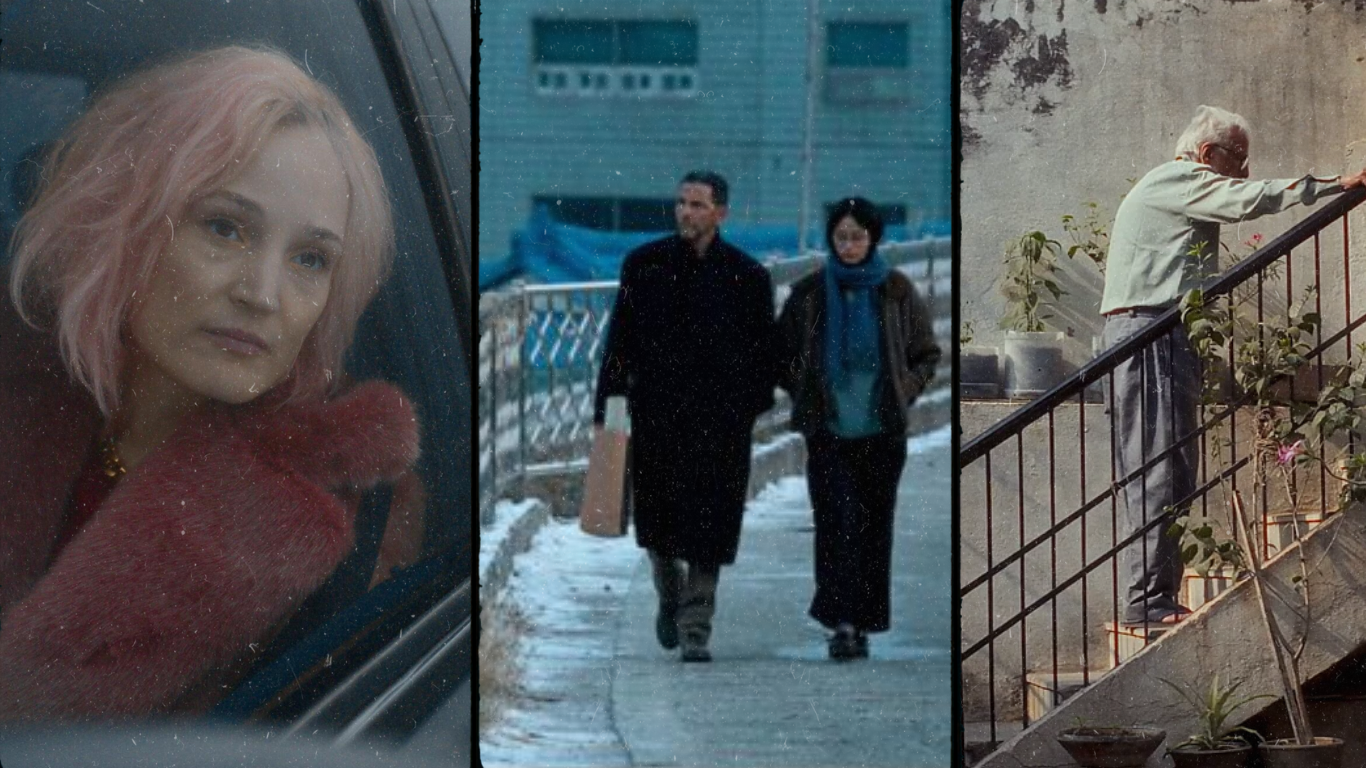
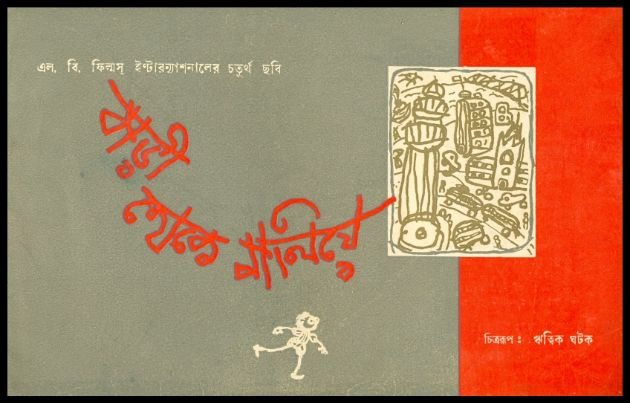
Calcutta is a dead city, and all of us are ghosts, declares a young man, sitting with his friends at a restaurant, located along one of the thoroughfares in the metropolis. One of his companions responds by quoting a children’s rhyme by the Bengali writer Annada Shankar Ray: “You scold the little girl for breaking a bottle of oil, / But what of you grown-ups breaking the nation?” Another young man in the group asks: “Where is, indeed, that old Calcutta? …Old Calcutta had some magic, some rhythm.” This scene plays out early in the 1959 Bengali film, Bari Theke Paliye (The Runaway), directed by Ritwik Ghatak. Based on the eponymous novel by Shibram Chakraborty, the film dramatizes the adventures of its eight-year-old protagonist, Kanchan (Parambhattarak Lahiri), who runs away from his village home to the big city. As this scene progresses, the conversation is overheard by Kanchan, who is sitting at the next table.
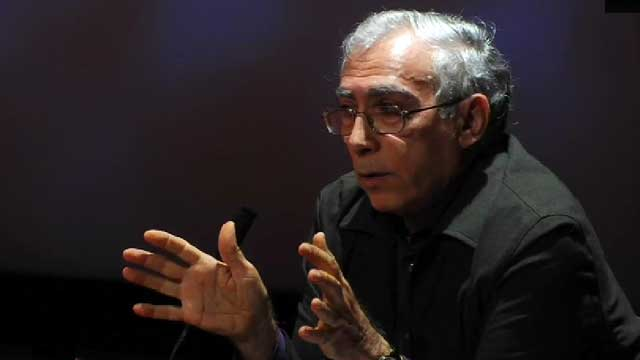
Of all the films in Ghatak’s small oeuvre, Bari Theke Paliye has received the least critical attention, possibly because itis often considered to be made on a lighter note, in comparison to his Partition trilogy — Megha Dhaka Tara (The Cloud-Capped Star, 1960), Komal Gandhar (A Short Note on a Sharp Scale, 1961) and Subarnarekha (1965) — or the epic Titas Ekti Nadir Naam (A River Called Titas, 1973). Even as his centenary was celebrated last year, articles commemorating it highlighted his reputation as the filmmaker who most effectively depicted the human cost of the Partition on screen. Ghatak’s celebrated contemporary Satyajit Ray also remarked that “the tragedy of Partition” was “Ritwik’s lifelong obsession.” “He himself hailed from what was once East Bengal, where he had deep roots. It is rarely that a director dwells so single-mindedly on the same theme,” wrote Ray in his Foreword to Ritwik Ghatak’s collected essays on cinema, Rows and Rows of Fences. This sort of framing has evidently focussed the critical attention on Ghatak’s Partition trilogy, while ignoring a film like Bari Theke Paliye, which is also a metaphoric narrative of the effects of the historical event on Calcutta.
The longue durée of Partition in Bengal
However, before proceeding to analysing how the film does that, it is essential to reflect on how the experience of Partition in Bengal was different from Punjab. The Partition of British India in August 1947, at the end of nearly two centuries of colonial rule, into the independent nations of India and Pakistan, resulted in widespread inter-community violence between Hindus, Muslims and Sikhs. About 2 million people died and 20 million were displaced by the cataclysmic event, described by American political scientist Paul R. Bass as a “mutual genocide”. In a 2015 article for the New Yorker, popular historian William Dalrymplewrote that Punjab was “the principle centre of violence”. However, others, such as historian Debjani Sengupta haveargued, “the partition in the East is the longue durée rather than the short time of political events”. The “Bengal region has seen a slower, although no less violent, effect of the vivisection with the trauma taking a more elliptical and metaphysical turn,” writes Sengupta in the Introduction to her monograph, The Partition of Bengal: Fragile Borders and New Identities (2016).
The longue durée effects of Partition in Bengal are evident even now, nearly eight decades after the event — at least in the public discourse. While addressing a political rally in December last year, Prime Minister Narendra Modisaid that if elected to power in West Bengal, where Assembly elections are scheduled on 23 and 29 April this year, his Bharatiya Janata Party would ensure that it identified and removed ghuspetiya (infiltrators) in the state from the neighbouring country of Bangladesh; his statement drewcriticism from the state’s ruling party, the Trinamool Congress. The Special Intensive Revision (SIR) exercise carried out in the state by the Election Commission of India, to identify legitimate voters in electoral rolls and remove illegitimate ones, has also been embroiled in controversy for allegedly targeting Muslims, with themedia reporting that some Indian citizens have been removed from SIR lists and pushed into Bangladesh.
The anxiety over infiltrators — real or imagined — can be traced back to the process through which Partition refugees from the erstwhile East Pakistan (now Bangladesh) came into West Bengal (and other states of the Northeast, such as Assam and Tripura) through the 1950s and 1960s, right up to the Bangladesh War of Independence in 1971. As Asian Studies scholar Ravinder Kaurwrites: “A study of Bengal refugees has shown how an authentic refugee type within the state discourse was fashioned after the Punjab experience of internecine violence and movement. This frame seldom fitted the Bengal refugees, whose journeys were not always entwined with dramatic episodes of violence and who were, thus, discursively located outside the orbit of authentic ‘refugee-ness’.” The lack of state recognition of the identity of refugees continues to cast its shadow, as we see, on the political discourse around authentic citizenship, but it is also possible to understand this through works of art, like Ghatak’s film.
Through the eyes of a child
Unlike Ghatak’s other Partition films, Bari Theke Paliye is narrated from the perspective of a pre-teen village boy, Kanchan. His father, the headmaster of the village school, is a typical disciplinarian, who scolds Kanchan and metes out corporal punishment with alarming frequency, even for minor transgressions. After one particular incident of being disciplined, Kanchan decides to run away from home. His escape is framed as an adventure, at least in his own mind: Kanchan tells a servant who follows him that he is going down the Orinoco river in South America, surrounded by forests filled with hostile inhabitants. For a boy from a village in Bengal — and the mostly Bengali audience of Ghatak’s film — the imaginative landscape of a South American adventure would have been available in the mid-20th century through popular adventure novels, such as Jules Verne’s The Mighty Orinoco (1898). Before leaving for Calcutta, he tells his friend: “It’s a wonderful city, where the nights are as bright as day… Calcutta is El Dorado.” Then, he takes the train to the big city.
Running away from home and going to the big city are well-established leitmotifs in literature and cinema. Literary scholar Sam Bluefarb writes, in his book The Escape Motif in the American Novel: Mark Twain to Richard Wright (1972), that it originated, in modern American literature, in Mark Twain’s The Adventures of Huckleberry Finn and continued well into the mid-20th century, with the hobo fiction of Jack Kerouac. In some ways, it replicates the narrative structure of the Biblical Fall and exile of humans from the Garden of Eden, and the eternal longing to return to it. In Bengali literature of the 19th and 20th centuries, also, going away from home is a persistent metaphor, in fiction and non-fiction, such as Sarat Chandra Chattopadhyay’s Srikanta (1917-1933), Bibhutibhushan Bandyopadhyay’s Chander Pahar (1937) and Aparajito, which was adapted by Satyajit Ray into two films, Aparajito (1956) and Apur Sansar (1959), and Syed Mujtaba Ali’s Deshe Bideshe (1949), to name only a few. It is in this context that we must understand Kanchan’s desire for adventure.
On his first day in the city, Kanchan is rescued by a street vendor called Haridas (Kali Banerjee) from being run over by a car. Haridas takes Kanchan to his home in a slum and reveals that he is a Partition refugee. “In my country, I was a primary schoolteacher,” he says. “Then the country was partitioned and I ran away from home. I tried looking for a job here, but I didn’t find anything. I guess they don’t need teachers here.” Ghatak connects the experience of a Partition refugee quite directly to the act of running away from home. Later, when Haridas goes out to get food for Kanchan, he runs away, yet again, to roam around the city streets. A series of images captures his observations, while an itinerant baul sings: “Ami onek ghuriya sheshe eilam re Kolkatta, / Er rokom shokom dekhiya amar ghuriya geche matha. (Having travelled around, I finally came to Calcutta, / Its sights have made my head turn.)”
The sights Kanchan sees include easily recognisable landmarks such as the Howrah Bridge, the Ochterlony Monument (later known as Shahid Minar), multi-storeyed buildings and trams and busses, but also factories and refugees and squatters on the sides of thoroughfares. He wanders into a wedding and enjoys a hearty meal, and when he comes out next morning, he finds a family of beggars eating the food thrown away in the garbage bins outside. A woman takes him to her home — another slum — and feeds him; she also tells him about how her own son, about his age, has gone missing. Haridas also tells Kanchan about his missing mother. Missing sons and mothers are a poignant reminder of the cataclysm of Partition, during which 3.4 million people went “missing or were unaccounted for,”, according toa 2008 study by the Harvard Kennedy School. In Ghatak’s Partition drama Subarnarekha, a Dalit woman, Koushalya (Gita Dey), is separated from her son, Abhiram (Satindra Bhattacharya), in the confusion of displacement.
A little later in the film, Kanchan comes upon the woman again, as she is being assaulted by a mob on suspicion of being a kidnapper. “Why is there so much pain here?” Kanchan asks Haridas. In response, Haridas tells him the story of the Happy Prince, by Oscar Wilde. “The migratory bird from the Nile had also asked the Prince: Why is there so much pain here?” Like migratory birds returning home as the weather turns, Kanchan, too, returns to his village at the end of the film. The boy’s homecoming and reunion with his parents, however, is a sort of wish fulfilment, which is denied to more permanent exiles, such as Haridas. In Ghatak’s later film Komal Gandhar, the two protagonists — Anusuya (Supriya Devi) and Brighu (Abanish Banerjee) — stare longingly at a railway line connecting east and west Bengal, but now permanently sealed off by the Partition. They can never take the train again; they are permanently exiled in the verdant landscape of nostalgia.
The pain of displacement
The term nostalgia was coined, in 1688, by Swiss doctor Johannes Hofer, by combining two Greek words — nostos (a return to the native land) and algos (pain); he defined it as “the sad mood originating from the desire to return to one’s native land.” Svetlana Boym writes in her book, The Future of Nostalgia (2001), that in the seventeenth century it was considered to be a disease, and “the first victims… were various displaced people… freedom loving students from the Republic of Berne studying in Basel, domestic help and servants working in France and Germany, and Swiss soldiers working abroad.” The “disease” spread through “associationist magic”, writes Boym — Swiss soldiers became nostalgic on hearing bells of shepherds, and Scottish soldiers suffered from it when they heard bagpipes. Several cures were suggested for it, such as leeches, hypnotic emulsions, opium, but the best cure of all was a return to the motherland.
The nostalgia of the young men in the café in Bari Theke Paliye, however, hasve no cure. Like the refugees cannot return to their homes, the men also cannot return to pre-Partition Calcutta. Film scholar Erin O’Donnell writes in her essay, ‘Ritwik Ghatak’s Calcutta and Nagarik on his birth centenary’, that in “Ghatak’s films, the metropolis… is frequently constructed in terms of exile, estrangement, separation and rootlessness (but also punctuated with distinct moments of promise and possibility) …claustrophobic interiors (Calcutta’s cramped inner city spaces) often contrasted with immense exteriors (pastoral West Bengal landscapes).” This is also evident in Bari Theke Paliye, where the scenes of Calcutta’s squalor are frequently inter-cut with Kanchan’s memories of his village, with open fields, dense forests and skies dotted with cotton-like clouds.The city streets are overrun with refugees and squatters, itinerant performers and pickpockets, violent mobs and indifferent crowds, well-to-do residents, and destitute beggars. Kanchan’s name translates into English as “gold”, and he goes to Calcutta, imagining it to be El Dorado, the mythical city of gold; he also hears the story of the Happy Prince, who is covered in gold. Yet, the true gold is in his village, which is metonymic of sonar bangla, or Golden Bengal. His homecoming offers emotional respite, but it also mirrors the permanent going away from home of refugees like Haridas. There is no permanent resolution to the exile of the refugees in the city, who continue to survive with the scars of history.