Esmé Warmuth-Poppiti
Part One of Esmé’s two-part analysis can be read here.
Modern Subgenre Works:
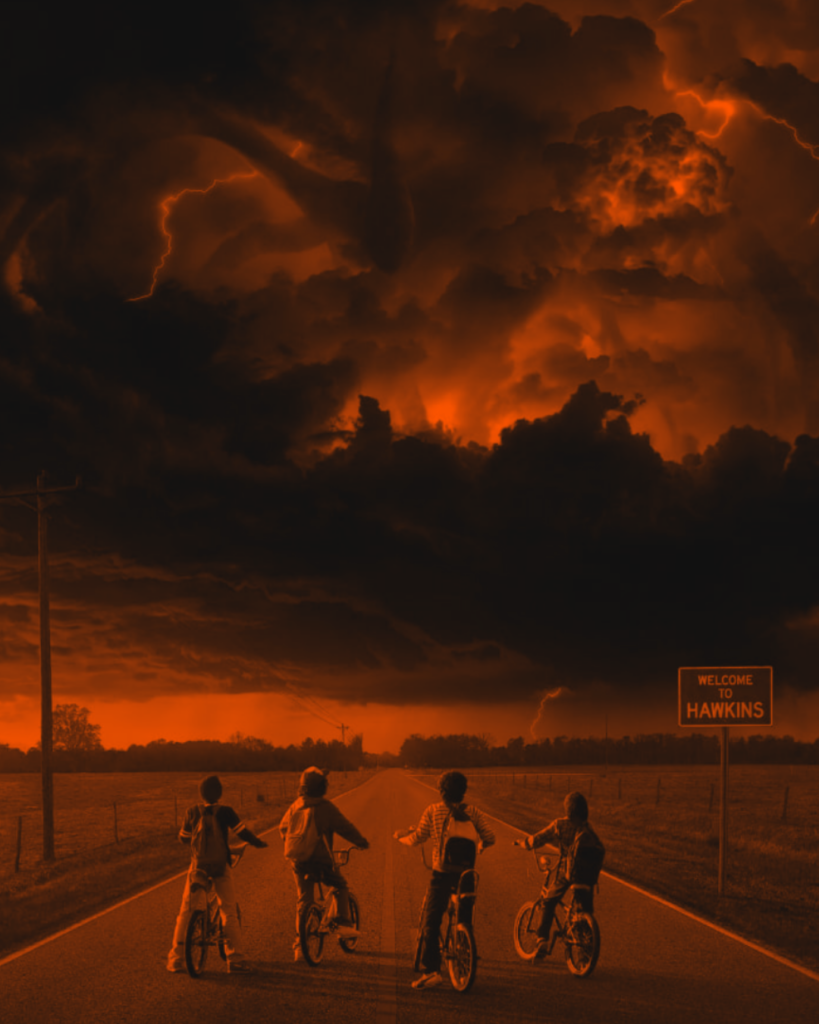
Though both Stranger Things and Muschietti’s It were originally products of the 2010s, they have both had tremendous resurrections of popularity over the fall and winter of 2026 following the release of Stranger Things’ fifth and final season, and the prequel: IT: Welcome to Derry, which aired simultaneously, creating (perhaps intentionally) a deeply nostalgic reminiscence back to the summer of 2019 which saw the simultaneous release of It: Chapter Two and Stranger Things 2—works often mentioned in the same breath due to their similar themes, shared main actor, Finn Wolfhard, and overlapping fanbase.
Muschietti’sIt duology and the early seasons of Stranger Things both built themselves up on cultural nostalgia for the 80s, heavily borrowing iconic imagery, themes, and plotlines from the iconic works of the subgenre and presenting them to a new generation of audiences. This formula was successful both because it tapped into existing, pre-written conventions to present compelling stories to young people who did not live through the 80s, and it provided older viewers with a familiar type of entertainment from their youth. Parents and children could both enjoy the works, and kids could learn the subgenre’s classic messages of being loyal to your friends, following your gut, and not being afraid to grow up.
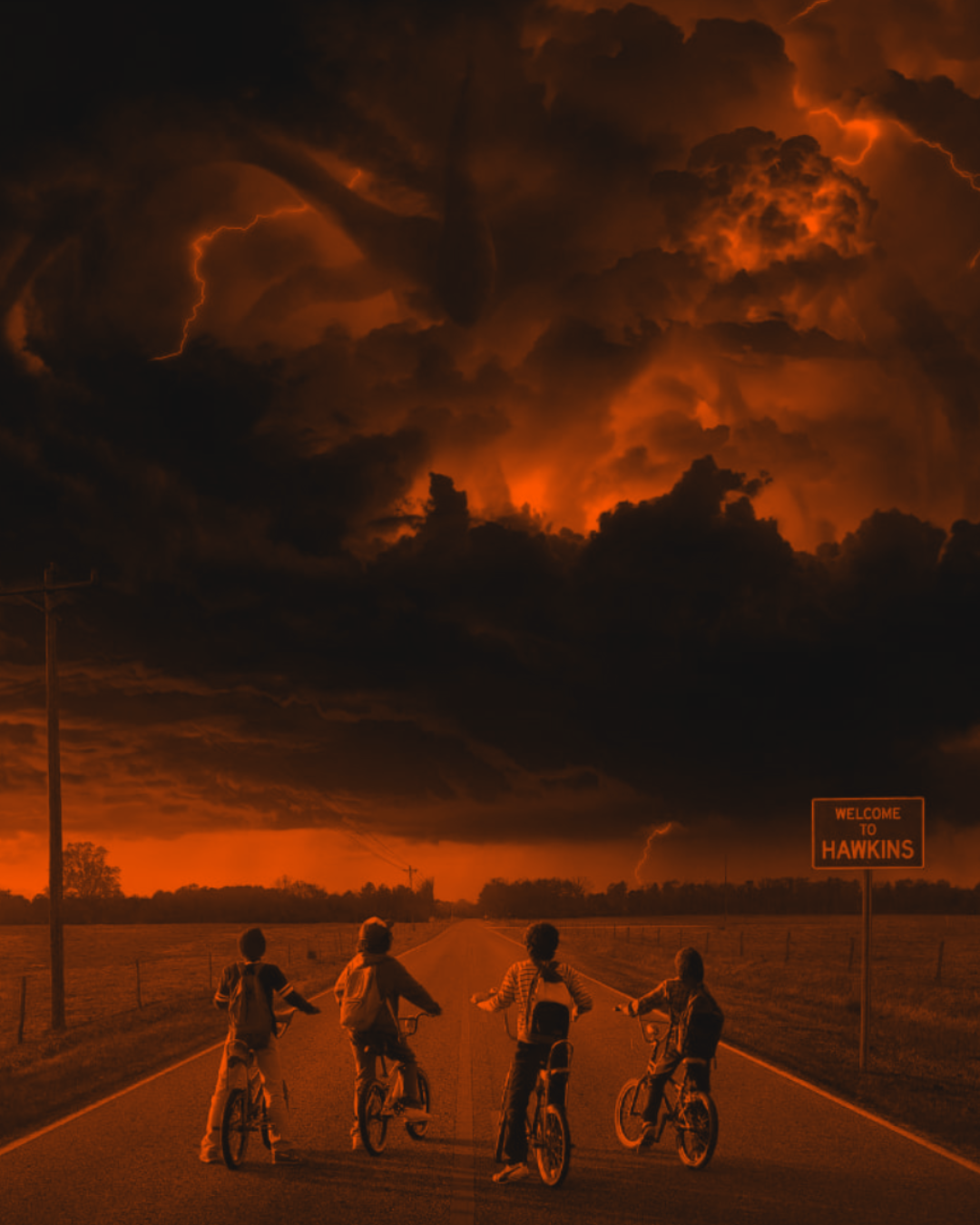
It and Stranger Things have made no secret of their influences. While the new It franchise works within the structure of King’s existing story, emulating and paying respect to the subgenre that King originated in style while not needing to craft a new story, Stranger Things is a magpie of old 80s media. To name just a few examples of this—the Duffer Brothers name their leading bully Troy after the character from The Goonies, and Eleven wears a replica of older brother Brand’s workout clothes in season five. El’s name is only one letter off from E.T. (and similar to Elliott), her sudden arrival in the world of the party is reminiscent of E.T.’s crashlanding on earth, and the group of boys help El ride away from government officers on their bikes in an additional direct homage to E.T.
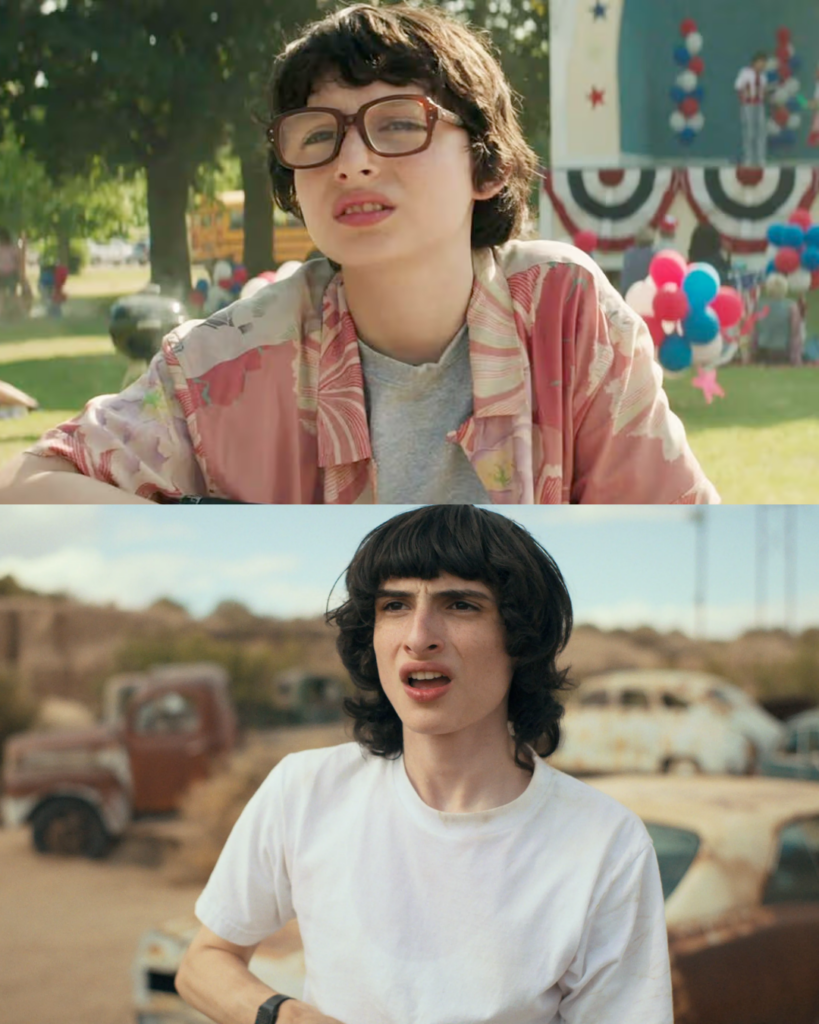
There is also a cast of denim-wearing teenage boys and preppy girls in the subplots of Stranger Things’, namely Steve Harrington, Billy Hargrove, and Nancy Wheeler, all of whom evoke the complex social commentary and visual aesthetics of works like The Outsiders, providing a rich backdrop of 80s nostalgia for the plot to progress in front of. Stranger Things also draws directly from It, portraying Vecna, a monster that, like Pennywise, knows your mind and can project your deepest fears in front of you. The very conclusion of the show, featuring a narration from Mike Wheeler as he begins his future as a novelist, also calls to mind Stand By Me’s Gordie, It’s Bill, and The Outsider’s Ponyboy, all of whom end up writing some version of their life story, creating a metanarrative wherein they are both protagonist and author.
Stranger Things cared deeply about honoring the subgenre it exists within. However, despite having all the ingredients for a successful and satisfying story of this subtype that grows along with its audience, somewhere along the way, Stranger Things went wrong and lost the true heart which Kids on Bikes stories succeed because of. Understanding that Stranger Things exists as a kind of Frankenstein product of many different subgenre conventions projected onto an original story can allow for it to be understood within that subgenre. Its departures from the norms of its subgenre resulted in the failure of its final season. This is even more apparent when contrasted with It: Welcome to Derry, which achieved its highest ratings later in the season when it began adhering more closely to the conventions of its subgenre, which will be elaborated on below.
Subgenre Modernization:
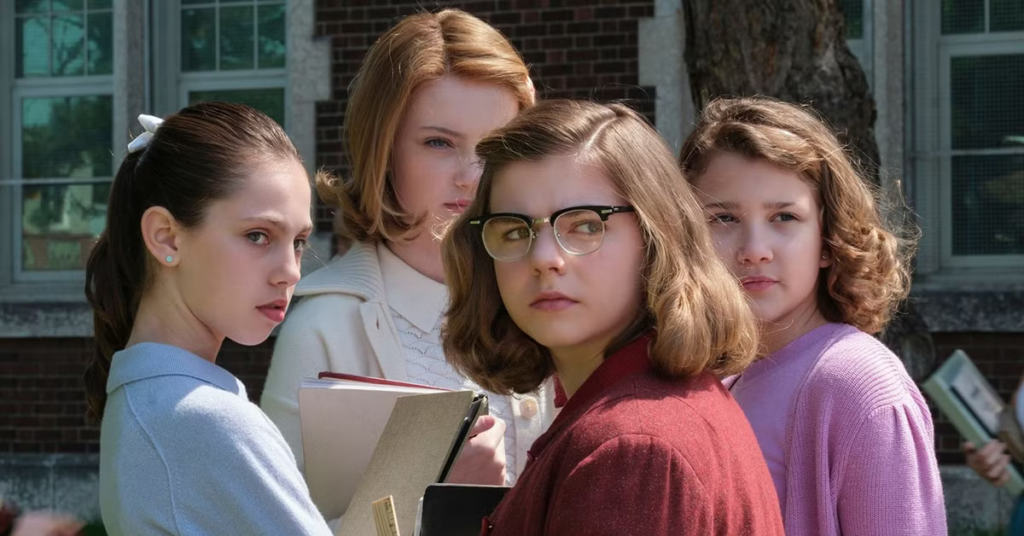
Both Stranger Things and the It franchiseintroduce female characters into these structures of traditionally male friend groups, giving them agency beyond being sexualized or victimized. While It’s Beverly is the only girl in the Loser’s Club and is poised primarily as a romantic interest for two of the boys, It: Welcome to Derry corrects and expands on this structure, introducing a trio of female girls—Ronnie, Margie, and Lily, who go on the traditional adventures of the subgenre with the boys, and also form their own friendship. Similarly, Stranger Things’ El, Max, Nancy, and Robin are developed characters outside of the boys and yet still get to join in on the fighting and be present members of the group. This contemporary expansion of a traditionally male-dominated subgenre makes room for a wider demographic of viewers to be better represented and seen by the characters within their generation’s primary coming-of-age stories.
Despite this, in Stranger Things’ final season, instead of truly integrating El into the boys’ friend group, they end the show with her either dead or exiled (refusing to commit to either ending), narratively punishing her without any recompense for her abusive upbringing or lack of a real childhood. It’s an upsetting message for a young girl who wants to be one of the boys—of the two girls who were in the show’s main grouping of children (unlike Nancy and Robin who merely hovered around it), they can either end up like El, or if they’re luckier, consigned to a “sexy” girlfriend role like Max.
Beyond gender, It: Welcome to Derry also makes a concerted effort to centralize characters of color within a subgenre that has been overwhelmingly white in the past. While Stranger Things and the original It duology each have one main black character, the It prequel crafts an ensemble cast of characters of color including Cuban immigrant Ricardo Santos, both the Grogan and the Hanlon families who are black, and the fictional indigenous Shokopiwah tribe. This further shows the progress that has been made within the subgenre to pay homage to the original works while still thoughtfully integrating diverse and modern plotlines.
Stranger Things, in the decade it spanned from beginning to end, did not get the complete fresh start that an entirely new prequel provided the creators of the It franchise, however, examining the amount it changed over the course of five seasons reflects questionable priorities, especially when compared to It: Welcome to Derry. The show never sought to engage with racial dynamics in a meaningful way, and likewise with gender, largely abandoned its female duos like El and Max or Nancy and Robin in the final season, pairing their girls with men instead and not interacting with the realities of being a woman in the 1980s.
Modernizing these shows in a progressive way to diversify which audience members are represented is positive when done right. This is not the issue with the 80s subgenre coming into the present day. When modernization does become problematic is when the analog style of 80s media meets the present day CGI craze.
CGI and Subgenre Departure
It: Welcome to Derry and Stranger Things 5 both integrated significant amounts of Marvel-like CGI into their plotlines, contrasting the earlier It duology and seasons of the show which used special effects more sparingly, and felt largely practical. Beverly’s blood-soaked bathroom in the first It movie or Steve fighting a demogorgon with a baseball bat in season one of Stranger Things brought supernatural elements into the real world, using some computer-enhanced visuals to execute this. These examples are very different from season five of Stranger Things’ greenscreen CGI wasteland setting for the final battle, or the elaborate and highly specific forms Pennywise takes in the first few episodes of It: Welcome to Derry including what one character describes in episode one as “a giant fucking mutant baby.”
In the early seasons of Stranger Things, the Upside Down was primarily characterized by physical goo, darkness, particles in the air, and thrumming synth music—all of which build up fear and anticipation without over-playing the CGI-monster hand—the final season’s usage of high-budget special effects and unrealistic backgrounds made it feel inauthentic and unrelatable. Things like the children being kept inside a giant dragon-shaped pod in the finale, or Nancy and Jonathan being buried alive by unidentified white goop in episode six made the show seem more focused on using its up to $480 million dollar budget to create exhibitions of TV smoke and mirrors rather than genuinely requiring such settings for the plot.
While Vecna remains somewhat humanoid (often being shown in his human form) everything around him and the tools he uses to fight become increasingly less recognizable as the show progresses. A CGI monster is one thing, but an entire CGI world is quite another. By taking the humanity out of the monsters and backdrops of the TV shows and presenting audiences with increasingly computer generated landscapes and monsters, viewers become distracted by spectacle and are less able to relate their emotional fears to the media they are watching.
Contrastingly, while It: Welcome to Derry began in a similar way to Stranger Things 5, using high-budget CGI and complex special effects, by the second half of the season, it hit its stride. For the first five episodes of the show, Pennywise never appeared in his clown form, but rather in high-CGI body-horror-based forms—because of this, viewers did not see their own generic fears represented in him like they may have in the film duology, in which he depicted fear of sickness, fear of losing a loved one, or fear of being outed as gay. In episode 5, when the true form of Pennywise the clown is revealed and Bill Skarsgård returns to his iconic role, the show stops solely relying on other CGI monsters to represent his shapeshifting, and there is a noticeable boost of IMDB ratings in the second half of the season. With the return of the iconic clown, and the show’s central group of children finally brought all together, in episode five the show stops its focus on horror, and begins to become a Kids on Bikes show once again, complete with its central villain once again.
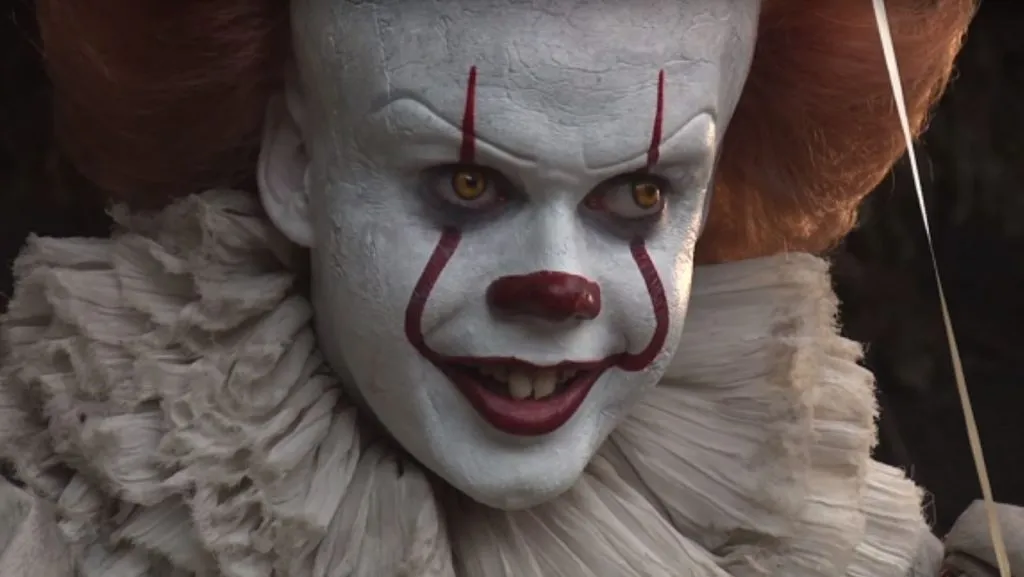
The seventh episode of It: Welcome to Derry’s season, “The Black Spot” is the show’s highest rated on IMDB. This episode contains only a few scenes of Pennywise, and instead focuses on interpersonal relationships, paying homage to the subgenre and King himself, and scaring audiences with the true horror of evil people. With very little CGI and monsters appearing in the forms of human ghosts and the humanoid clown Pennywise, this episode reunites father and daughter Ronnie and Hank Grogan, and shows the doomed love between characters Rich Santos and Marge Truman. When the nightclub is burned down by racists in an attempt to kill Hank Grogan, Rich sacrifices himself for Marge, and Dick Halloran chooses to help the children at the risk of his own safety overcoming his fears. The horror elements, when they are introduced, exist in direct and secondary relation to these character-based plots.
This episode masterfully wields the dramatic irony that comes with a prequel series—by this point, fans of King’s book and the original movie have likely realized The Black Spot nightclub is going to be destroyed soon, and that Rich will likely die, causing Marge to name her son after him in the future. The nostalgia and excitement that comes along with knowing how the story is going to end is balanced with moments of true joy and connection among the characters, making the tragedy all the more impactful. Importantly, the supernatural elements in this episode only exist as catalysts for the characters to complete their arcs, and are never the main focus. The urge to showcase scary monsters never overtakes the central interpersonal plots. The primary emotions are joy and sadness at the fates of the characters, rather than simply horror or fear of some over-complicated Pennywise form.
Turning to Stranger Things 5, though there is plenty of CGI, a moment of such emotional impact never comes. The reason for this is because the interpersonal plots are sidelined in favor of focusing on the specifics of how to defeat the supernatural evil. At this point, of course, there is no narrative point to even having a supernatural evil in terms of this subgenre, because it is no longer being related to the characters’ emotions and is instead standing on its own and casting fear over every character uniformly. The final season failed to successfully interweave unique character conflicts with fighting Vecna, and instead resolved plot points like Will Byers’ repressed sexuality or Nancy and Jonthan’s breakup prior to the finale in a way that felt rushed and divorced from the main action, sending the characters into their final battle with little left to be worked through. There was nothing of The Goonies’ looming threat of foreclosure or The Outsiders’ threat of child protective services.
This failure is surprising since in past seasons, Stranger Things balanced its supernatural and interpersonal conflicts well. Considering some iconic, fan favorite moments from earlier seasons such as Steve’s redemption at the end of season one, Robin coming out as gay to Steve in season three, or Max escaping Vecna in season four, these are all character development moments that were facilitated by supernatural or extraordinary events. Nancy and Jonathan trapping the demogorgan thematically allowed for Steve’s character to be developed, Steve and Robin being tortured by Russians allowed their friendship to grow and for Robin to come out to him, and Max being trapped by Vecna allowed for her to overcome her suicidal ideation and fight to live. These were all powerful moments that unified both the internal and external conflicts the characters were facing.
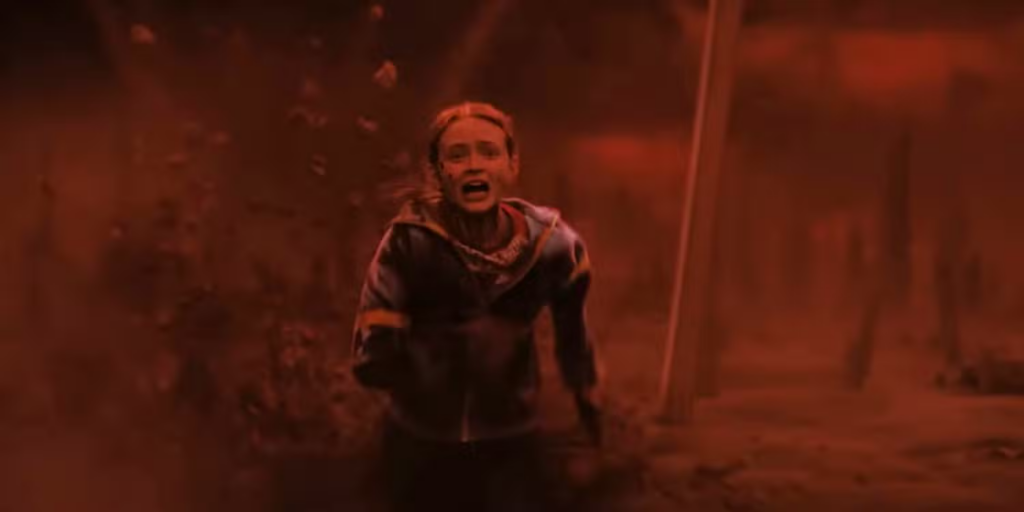
Even looking specifically at season four, Chrissy and Eddie were only briefly introduced, but quickly became fan favorites because they were facing both human conflicts and larger than life conflicts. Chrissy’s insecurities were relatable, and she was shown to be a multi-faceted character prior to being killed. Similarly, Eddie being framed for murder and feeling guilt for running away from the crime scene was an engaging character arc and allowed for him to be fully developed by the end of the season. Him playing guitar and sacrificing himself in Chrissy’s name showed his personality and his supernatural death was clearly a way of resolving his internal struggle. Had his personal conflicts been resolved prior to his self-sacrifice, his death would have felt pointless and separate from his arc, which is how much of the final season felt due to the narrative framing. In season five, the show misunderstands its viewers’ priorities, and sidelines its character development in order to build to a supernatural climax that feels low-stakes because it lacks the usual interpersonal stakes it would’ve had in past seasons.
The classic Kids on Bikes feeling is largely lost in the final season of Stranger Things. The show seems ill-equipt to handle its main characters having grown up in the ten year run of the show, and infantilizes them, losing the emphasis that classic Kids on Bikes stories have of coming to terms with growing up and changing. El and Will are both glued to their parents’ sides during the final season, separating Joyce and Hopper (a fan-favorite duo) and abandoning the subgenre’s hallmark of unsupervised kids standing up for themselves without their parents. While Joyce and Hopper have always been involved in the Upside Down in some capacity (though not usually in the same plotlines as their children) more problematic is the introduction of Karen Wheeler into the central supernatural plot. The former-background character, there to support her kids from a distance, suddenly becomes equipped to fight demogorgons while drunk or severely injured, and has multiple hero moments fighting monsters. Despite the growth of her role, Karen never resolves her interpersonal conflicts introduced in prior seasons like her unhappy marriage and a struggle to connect with her children—her demogorgon fight feels random and disconnected from her character arc, removing all separation between the kids’ fights and their normie parents.
By bringing adults directly into the kids’ stories, and by having actors in their 20s playing teenagers, the subgenre’s classic feeling of childhood is disrupted. The adults in these stories are not supposed to believe in the supernatural/scary elements—by framing these monsters as things only revealed to the children, the metaphor for growing up and other childhood-specific fears is deepened because it’s something only young people can truly understand. In Stranger Things 5 the monsters are stripped of any discernable thematic symbolism or meaning and are instead just things to fight.
It: Welcome to Derry also includes parents and adults within the children’s fight against Pennywise, but does so in a very intentional way. It is only characters of color like Leroy and Charlotte Hanlon, Mike’s parents—who are shown to be outsiders from society, ostrichized by their white neighbors as one of the only black families in town—who join the children in their fight against Pennywise. This exclusion from hegemonic society brings them into the fold of the children, and their ability to see Pennywise and assist the kids only deepens his thematic meaning as a representation of societal fears and bullies. This choice adds nuance to the subgenre, and actively and centrally tackles issues of racism and discrimination within the plot, showing how this subgenre can develop positively with time. It’s also notable that while parents do help children fight Pennywise in this show, they are not constantly hovering over their children, and the kids still do plenty behind their parents’ backs and against their wishes, unlike the Stranger Things characters who are rarely freed from their adult supervision for long.
This article aimed to shed light on trends and patterns in the Kids on Bikes subgenre of literature, considering both works of the 1980s and the modern stories which continue to build on them. In doing so, the central flaws of the final season of Stranger Things are evident, especially when compared to It: Welcome to Derry. While the latter engaged with iconic and beloved source material in a way that both honored the subgenre it existed within and integrated progressive ideas and compelling new characters, the former fell into a show-offish display of budget and CGI prowess and abandoned its emotional core. Stranger Things’ final battle was entered into with low stakes for its characters since the majority of the open plotlines had been either resolved or abandoned by that point, and the supernatural conflict was not held in parallel to any genuinely relatable issues. Stranger Things 5 failed to uphold the subgenre’s traditional balance of themes, resulting in a finale that felt hollow and unconvincing to many fans.