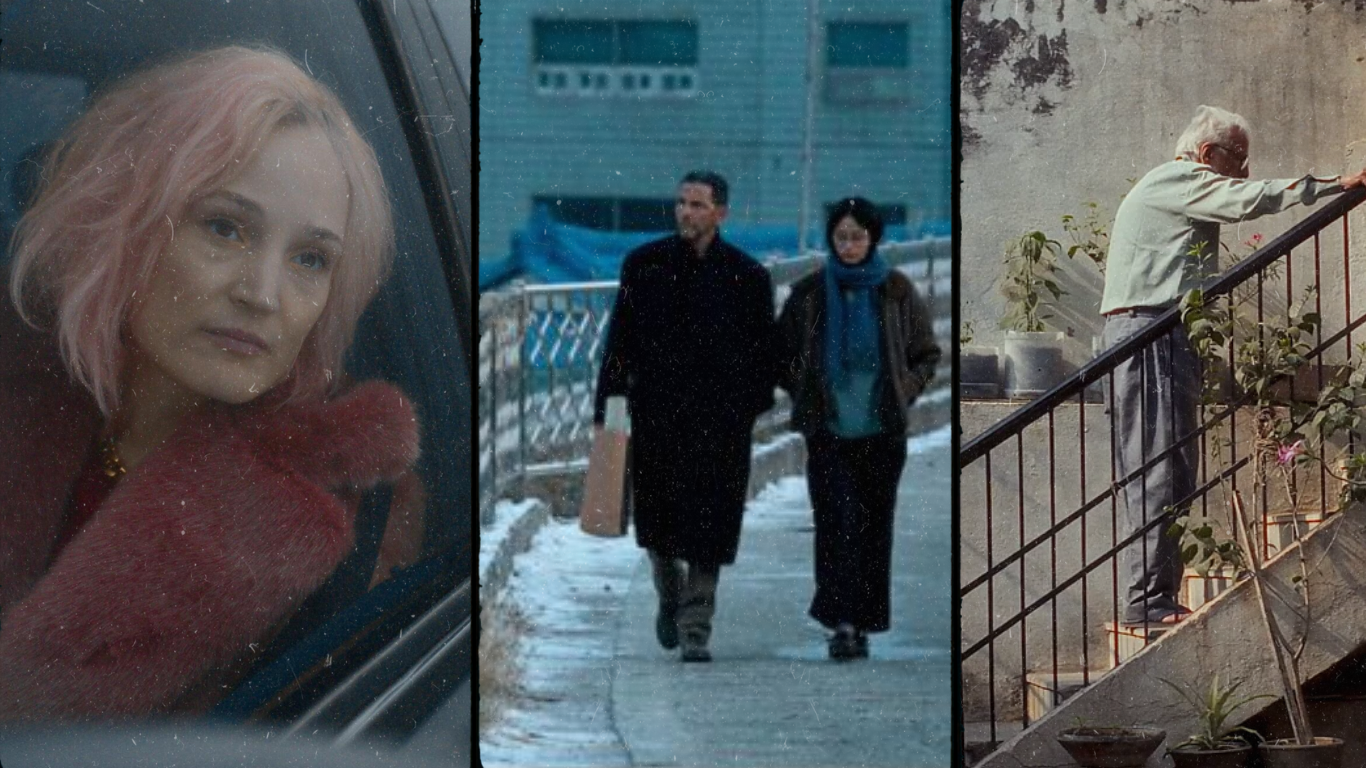
Few Iranian film directors have ever managed to create a single image that is truly unlike anything you have seen before. In that respect, Arby Ovanessian’s Chechmeh seems almost incomparable with any other film in the history of Iranian cinema. Narrating the tribulations of a man who discovers that the women he loves is his friend’s wife, it is a film which gives us a lot of faith not only in the art of filming, but in the spiritual content of art itself. If the spectator of Chechmeh could live the transcendental content of the film, the film itself could give the spectator the poetic depth that he/she wishes to see.
One of Ovanessian’s unique contributions to transcendental cinema is his devotion to the inner movement of things and beings. Ovanessian is certainly not a fan of the action or adventure type of movies, embodied especially in blockbuster American cinema. He is the polar opposite of an action film director. Rather, he wants to avoid outward movement and explore inner worlds. This is not to suggest that Ovanessian somehow neglects in his cinema the conventional virtues of mise-en-scene.But Ovanessian’s films catch the spiritual essence of things and relations to the extent that they de-emphasize the narrative movement in favor of the pictorial, lyrical, metaphoric and transcendental aspects of cinema. Ovanessian does not create artificially poetic objects in his films; they are becoming it and thanks to the perpetual passage of cinema of prose to a cinema of poetry, Ovanessian’s film tells us the story of this transformation itself.
Especially significant in this regard is Ovanessian’s use of symbolically loaded images expanding the boundaries of the narrative to cultivate a mode of “transcendental” we have largely forgotten or ignored. Ovanessian, reminds us and teaches us that the business of art is but to be expressive of the Transcendent. The phrase “Transcendental Cinema” derives essentially from the work of Paul Schrader, who defines the Transcendent as “beyond normal sense experience, and that which it transcends is, by definition, the immanent.” Furthermore, he describes transcendental expression as that which “attempts to bring man as close to the ineffable, invisible and unknowable as words, images, and ideas can take him.” As a result, Transcendental style in film “is a general representative filmic form which expresses the Transcendent”. Schrader describes the transcendental style in terms of its penchant for maximizing the mystery of existence. Implicit in Ovanessian’s art, in his transcendental project, is the requirement of a vision which is always renewing the event of spiritual unity, moving our secular world on to the next stage of that quest which is always to be performed.
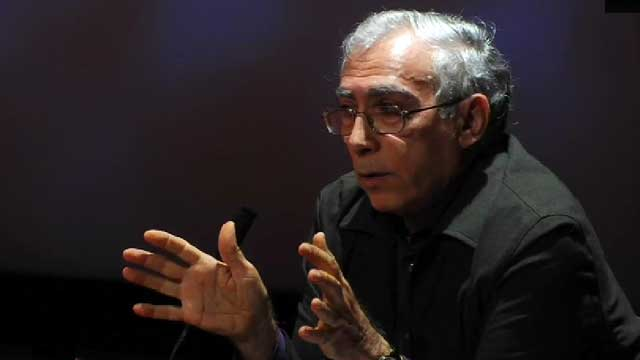
I think we can say that Arby Ovanessian brings to us in his films the inherent capacity of the human mind to transcend the material through artistic creation. Whether man can truly transcend himself through cinematic art is both a question and challenge that Ovanessian and his transcendental cinema pose for us. While he may seem quintessentially Iranian and Armenian, he is also universal because he portrays what should be possible in our lives as if it were possible. However, as we can see in his film Cheshmeh, he has a very meditative and distinctive style: he favors the fixed camera shooting. Shots in Ovanessian’s films are like a rich tableau; but they also define a space into and out of which the characters move. Also, its aesthetics distinguishes it from American and European film practices. The stylishness of the visual field indicates a cultural impetus to aestheticize, to raise the status of everyday life to something more meaningful, more harmonious and more beautiful than, in truth, it really was or could be. For example, the subject matter of Cheshmeh is what faces all of us as human beings. Behind the words and the images are the problems we all face in a life cycle. There are struggles of self-definition, of individual freedom, of disappointed expectations, of the impossibility of communication and of separation and loss brought about by the inevitable passages of love and death. Therefore, over the years of his difficult career as a stage director and a filmmaker, Arby succeeded to refine his form to a spare essence allied with the simple, everyday problems his characters face. As a result, in Cheshmeh, just as the situations and the people themselves become archetypes, the cinematic technique becomes a reduction to present, allowing for implication of transitoriness in the human condition. Shots of water tanks, smokestacks and laundry fluttering on backyard clotheslines recur in all his films. They are emotional rest-stops, outside the point of view of any character in the story and reminders of a transcendence of realities.
By extending the normal length of a shot, Arby imbues the banal with the transcendental power. The length and ambiguity of his shots in his film Cheshmeh are meant to shift the viewer’s attention from the representational to an image of a second reality which can stand beside the ordinary reality. Perhaps the first image of the transcendental in Arby’s Cheshmeh is the lengthy shot of the paper airplane, which is clearly a prelude to the moment of compassion, where the ordinary reality is transcended. As such, silence becomes an active ingredient in Arby’s Cheshmeh, when he invites his viewer to become more responsive to the meaning of things or to meaningful sounds lost in the noises of our everyday life. From Arby’s viewpoint, if a human being is supposed to have a true and compassionate feeling, there must be a feeling of the surrounding environment. This is why, Ovanessian is more concerned with the actuality of time and space than most Iranian filmmakers and it shows in his sophisticated, sometimes labyrinthine, treatment of temporal issues.
We cannot discuss the transcendental cinema of Ovanessian without the complementary spatial aspect. However, Arby alters our perception of time and space in Cheshmeh, to serve the emotional, philosophical and spiritual content of the film. The discontinuity and malleability of the space-time continuum in Ovanessian’s Cheshmeh derive not from an experimental urge, but from his interest in moving beyond the formulaic representations into a more subjectively truthful rendering of what is at any rate a rhythmic pulsation beneath outside appearances of reality. In the transcendental cinema of Arby Ovanessian, the closer the artist and the spectator get to the essence of the spiritual, the more the everyday temporal means diminish. The transcendental in art must have room to move, to change and to establish the spectator´s relationship with what Rudolf Otto calls the “Unifying Vision”. Here we find in Arby’s cinema the act of fusion with the world as a flash of awareness which transforms the hostile environment created by self-centeredness, narrow-mindedness and fanaticism into a harmonious whole. The greatest conflict portrayed in Arby’s Cheshmeh is not political or even religious, it is a form of disunity between humans and their environment. For Arby, life itself is very simple. It is people who tend to complicate life. Arby responds to this disunity through his camera by evoking empathy that brings with it awareness, a gradual understanding and finally a change of heart. He does not so much eliminate the fanaticism and narrow-mindedness of his contemporaries, he transcends it. Such overwhelming compassion cannot come from the cold environment that makes love impossible but comes only from touching the transcendent ground of being. This is how Arby translates superficial realism into a deep spiritual awareness which demands the viewer’s full emotional output. There are many points of comparison here between Arby’s Chesmeh, Dryer’s Ordet, and Tarkovsky’s The Sacrifice. In these three films we have a totally bold call for the invisible and intangible which asks us to sidestep narrative logic and accept the film as a strange mix of love and faith. This is a non-objective emotional event within a factual, emotionless environment. This ambiguity introduced by these film directors in their movies causes their viewers to constantly reevaluate the implications of faith and love in the modern world.
That is why, for the ordinary Iranian filmgoer, Cheshmeh is a difficult film to watch. The unprepared audience shows restlessness, especially during the slow movements of the camera. But, these camera movements are done intentionally by the director to give a more grave and startling power to the film. The camera movements of Cheshmeh are deeply embedded in the patterns of the film, and deeply affect our response to the film, in ways that even the most minute verbal analysis must fail to explain. The camera follows the characters but also goes beyond them—suggesting both the real-time sympathy of an observer and a supernaturally exact foresight of when and where the characters will appear and move. The smoothness and deliberateness of the camera movements give us a unique sense about the reality of the film’s world, the sense that everything is both happening for the first time and happening in eternity. By pacing the script slowly, Ovanessian gets us to feel the fullness of the compassionate life. It therefore becomes clear that Cheshmeh has little plot in the familiar sense, and no single main hero. The pauses in the dialogue are filled with characters hearing each other in a way that they almost never do in films. The distinctive resonance of their voices in space reinforces this impression. The characters who inhabit the gleaming ordinariness of Cheshmeh are haunted by a significance that they themselves don’t acknowledge, a significance that transcends their lives. Thus Cheshmeh is not a “plot” film. It’s an intense and turbulent poem with several motifs constantly in action, ultimately to be harmonized.
If we naturalize Cheshmeh, if we forget what is so transcendental about the film, we will lose the ability to be awed by the film and its qualities of empathy and compassion. Yet Arby does not want us to regard the characters of his film as remote and stylized beings or to see their lives as opaque and inaccessible. The triumph of Cheshmeh is to bring us a moving, detailed image of a life that is rich while ordinary, and at the same time to purify this image so that it comes to us as new and absolute, so that we feel the meaningful marvelousness of the moment. Because Cheshmeh demands more from us, it has more to give, than almost any other Iranian film.
A draft version of this article was presented at the Iranian Studies Conference at Montreal in 2014.