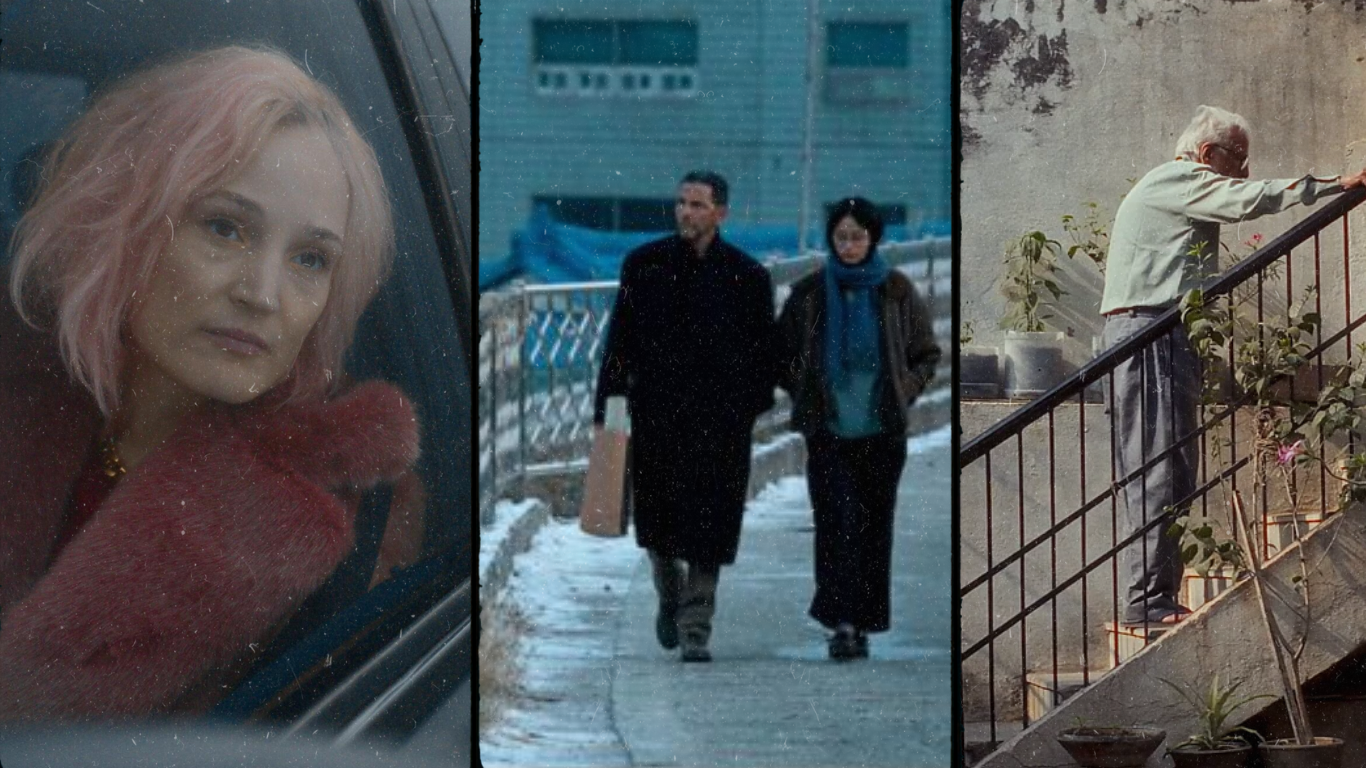

In Kanu Behl’s Agra, the camera rarely leaves a crumbling two-storey house. Inside, a young man named Guru paces between floors, corridors and a terrace that exists more in fantasy than in reality, his desires pressing up against the walls like damp. It’s a film about sexual repression, shrinking urban spaces, and the way middle-class families can turn homes into pressure cookers. After premiering at Directors’ Fortnight in Cannes in 2023 and travelling the festival circuit, Agra has finally reached Indian theatres in November 2025 – only to run into the brutal arithmetic of screen counts and show timings.
If you’ve followed Behl’s work, this trajectory feels grimly familiar. His debut feature Titli (2014), backed by Dibakar Banerjee Productions and Yash Raj Films, plunged into Delhi’s underbelly to study a car-jacking family and the circular nature of violence and masculinity. His follow-up, Despatch, headlined by Manoj Bajpayee, stepped into the collapsing ecosystem of crime journalism and digital news. Across these films – and now in Agra – Behl keeps returning to cramped rooms, bodies brushing past each other, and families (biological or professional) that feel like traps. Space, for him, is never neutral. It’s a character, an accomplice, sometimes the real antagonist.
In the week of Agra’s release, that metaphor has bled out into real life. Behl has been publicly documenting how the film is denied shows because “small films don’t fit into multiplex chain programming,” a fight that has prompted at least 46 independent filmmakers to issue a joint statement demanding fair access to theatres and OTT platforms. At the same time, he has also been sharply critical of the way streaming giants like Netflix pivoted from courting “independent cinema” in metros to chasing a lowest-common-denominator idea of entertainment in tier-2 and tier-3 markets. Taken together, it’s a picture of an industry where the walls are closing in on the kind of cinema he makes.
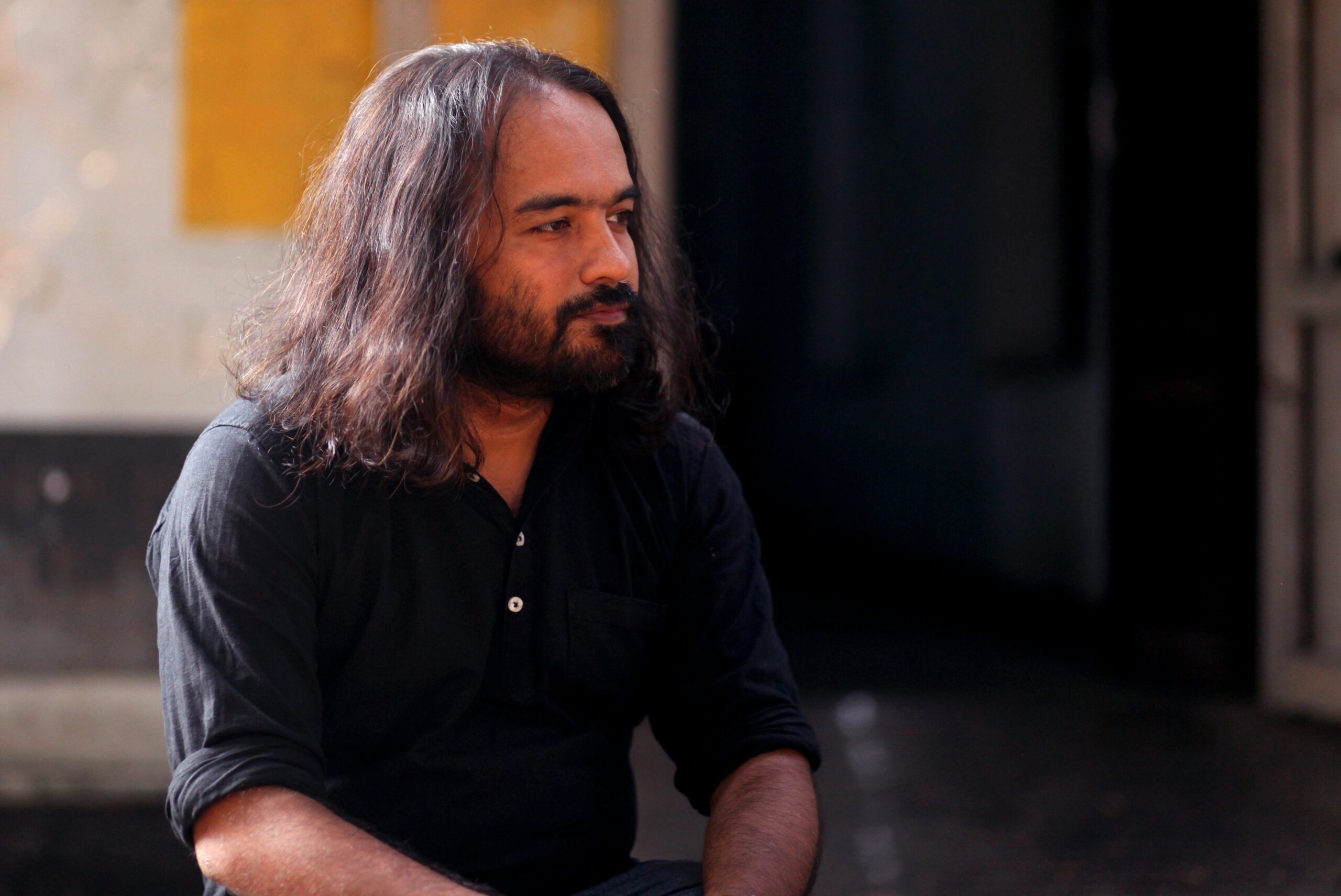
Which is why this conversation feels less like a standard “new film” interview and more like listening to someone take stock in the middle of a fight. Over the course of this exchange with Abhinav Jain for The Last DVD, Behl looks back at growing up in a cinema family, at the long haul from Titli to Agra, and at the emotional and physical spaces his characters inhabit. He talks about prep and instinct, the luxury of time in the edit, and the strange comfort of knowing he may never be a “career filmmaker” in the conventional sense. He is unsparing about streamers and multiplexes, but also about himself: what it means to stay honest in a collapsing cultural economy, how not to cheat on what you love, and why cinema, as he puts it, leaves you “completely naked in front of the audience.”
What follows is an edited transcript of that conversation.
AJ: How are you feeling about Agra finally reaching Indian theaters? Especially given the struggle over screens and show timings in the days leading up to the release. What has that journey been like emotionally?
KB: All I can say is right now I’m just trying to stay positive and keep fighting. That is the only thing that I can do. There is a larger, broader call for the community to come together. And I think it’s about time. There was a pressure cooker that was building up. It was building for the whole community. I’ve been having individual conversations so far, many individual conversations. And everyone was feeling this tight lid on things. If this can become the tipping point. Happy to add to that. We are trying to come together and now really, honestly, truthfully talk about how things actually are. We are going to come out. Many filmmakers are now joining in and they’re going to come out with a joint statement about the situation. I’ve become immune to this now. All I can afford to do is remind myself again and again at every juncture, at every point, that I have to fight. I’m not going to get anything comfortably. I am not even expecting things to be handed to me on a platter, never have. But I do expect, as a taxpaying citizen of this country, to have some basic systems in place and those systems should be in place for every citizen.Unfortunately, independent cinema does not have any of that.I’m a little disappointed that in spite of the best efforts from our previous generation of filmmakers, from some of the greatest luminaries that are around today, we’ve not reached that point. So maybe it’s our time now. Maybe it’s our time to pick up the cudgels and keep the fight on.
AJ: It’s interesting you say that you have become immune to this since you kind of grew up in a cinema family. Your parents were both writer-directors. What did it mean to grow up inside that ecosystem?
KB: My father used to keep telling me- “you are making an absolute huge mistake. Do not do this. Do not become a filmmaker, become an actor”. He used to say, your life will be much more comfortable if you are an actor. I remember it being said almost every day and still fight with him in my head. Growing up in that house was interesting. It had a lot of balance. You were not only discussing one side of the story. There was always healthy debate. What is the nuance in life?The dialectic was complex. It was really nice in the sense that I had this side, as I said, the father who was really critical, also the mother who was also really supportive and was saying, follow your heart. This is not just talk. Then you’re also seeing individuals go ahead and actually do what they are doing within their limited means. They were also doing things against the grain at that point of time, whatever work they were doing with this.
AJ: Did you find it difficult to separate your voice from that of your parents artistically?
KB: Not at all. I think I was always given space to be myself. There might have been strong disagreements. There might even have been some caveats. Might have been struggle with trying to make your father see your point. But at the end of the day, conversation was never stifled.
AJ: The connecting thread in your films is very noticeable and fascinating. Cramped spaces, bodies brushing past each other. Claustrophobic homes or offices or narrow streets of East Delhi. They do as much storytelling as dialogue. Both in a real and metaphorical sense. The anti-hero in Despatch, for instance, is constantly suffocated. The characters keep dreaming of escape in all your films. To another room, another floor, another city, but often end up circling around the same four walls. How do you think about space in your films, both when you’re shooting and when you’re writing? Do you first write your characters and then think, okay, these characters are suffocated in these ways individually, and hence their surroundings should convey that to the audience?
KB: I would just say I try to break it down for myself. WhenI’m writing, I act only as the writer. I don’t think I look at the film as a director for the longest time. I try to get the root material right. In any case, the kind of style that I write in is visual by itself. There is not a lot of talk. Even through the process of writing and creating, thinking about the time and space of the film, creating the rhythm of the film, the images are already seeping in. You can sense while you’re discovering the script that this is going to be the rhythm of this film. But the first discovery is more literary, if that makes sense. I don’t believe in the auteur theory. Cinema is effectively a collective art form. Everybody comes together and builds the film. It cannot be done by one person. But for me, it starts when I try to write it to the best of my ability, not interfere as a director. When I feel like I’m very close to the final film now, then I might enter as a director and say, okay, now how do I visually interpret this and make it better? And when you’re staging a scene, I’ll be completely honest at my level, with my resources, with the kind of films that I make, you do not often have the luxury of being able to do what you set out to do. You’re just firefighting, you’re just trying to make the best of each day with whatever resources you manage to conjure up for your principal photography. Obviously, you sit down, you do really detailed work, you try to address spaces in whatever best way you can. Fortunately, I work with an absolute magician that is Parul Sondh- absolute genius! So you sit with your DP and with the production designer and the costume designer and you try to figure out how to translate the meta of the film. What am I really trying to say? What is the best way to translate it visually through all these mediums? We are trying to address the space in terms of what it needs to feel like without anything being said. What is the spirit of that space? It is kind of like working with actors. More often than not, you try to pick actors who already have something of the character in their soul, in their journey: But sometimes you can pick an actor who might just externally be completely fit for the part, and you can infuse the spirit into them. I don’t know if I’m answering your question.
AJ: No, no, you are. You give yourself very little credit. It’s a team job but you are also a major part of the team. There are choices that you made in Titli which kind of blew my mind. In the introductory scene where Titli is walking in a crammed-up area. I noticed that at some moments, I’m only able to see the top half of his head. The camera is handheld and the camera is taking as many bumps while walking as Titli is taking. It’s even more impressive that while firefighting, you come up with these choices.
KB: It’s an interesting point that you bring in. I think for my process, the prep becomes really important. I know I’m going to get the least time on where I need the most time, but I’m prepared that I’ll get the least time there. I set myself up to prepare really well. And then I also need time to edit. My ideal time to edit a film is about nine months. Before I get to the shoot, I’m writing for around a year and a half. There’s solid prep, once the film is financed, once you’re out to make it, then you have solid prep, solid prep of 3-4 months. That time is not used so much for doing the script. I use that time infusing the spirit in all of these actors. So everybody has inside them a light that they want to burn once we go on shoot. You are just trying to get that light to be really strong and what happens is that if that light sits in your belly, not in your head, not in your heart, it sits in your belly and it has sat down for a while, two, three months before you begin, it actually becomes your instinct. All those decisions on the run can only be made if, subliminally, unconsciously already you’re prepared for what you’re going to do. All of us come together. We are going from the conscious to the subconscious to the unconscious, saying, these four months are about preparing the unconscious so it’s ready for this one particular stone that we are going to throw in the water to create exactly the ripples that we want to create, but all of us together have to create exactly those ripples. How do we do that?
AJ: That’s where the months of prep comes in. Where you are unconsciously these characters. You are in this world.
KB: Yeah.
AJ: Makes sense. I want to probe a bit into casting. Your casting has been so on point. There’s a lot of chatter about Mohit and Priyanka’s performance in Agra, but of course also about Rahul and casting. You cast Shashank and Shivani that made everyone feel that spark, even though the characters were as far from nice to each other as possible. I’m really interested in knowing about your casting process a little bit more. I know for some of these characters, of course, you audition.
KB: I don’t know how actively I think about the actors. But one strange thing has happened with all the three Films. In all the three feature films; while writing I had one person strongly for one character in mind. I was fortunate enough to get that person in all three cases. For Titli, I knew Vikram should be Ranvir Shorey. I was always writing for Shorey. In Agra, I was always writing Preeti for Priyanka Bose. Even though I hadn’t spoken a word with her. I didn’t know if she would do it or whatever. But I always had her in mind. For Despatch. I always had Manoj in mind. Maybe that helps me anchor the world in some way. Like if I know this is this person, then already you are sort of forming a wheelhouse for what this film feels like. You first try to also think: – how do I anchor this cast or how will this casting add to what little momentum I can get for financing? But essentially you are trying to always come to a position with your casting and your workshops where you are able to clean out the actors of everything that they’ve done before and make it feel like this is the first time you’re seeing them. You’ve never seen them before this.
AJ: Got it. I had a couple of questions around family. Your family and also the family of your characters. Because all these stories at heart are about family. You worked with your father on Titli and you’re now seeing him remembered through the film after his passing, I’m sure people would’ve pointed it out. Does that change how you think of cinema as a kind of a family archive? Especially for you?
KB: Not really. I think family is just a setting. If you are willing to explore a certain set of characters with all their nuance, with all their complexity, and you are trying to explore a certain theme through all these people. It’s like palette or colors. Family is just a setting. Family is the most explosive place to mine your meta. I am told a similar thing about sexuality in my film. But why should I not go there? why should I not be in those moments where my characters reveal themselves the most, they are the most naked? I’m not interested in getting them physically naked. They are the most emotionally naked. In the most revelatory moments of their lives, you are saying, udhar mat jao. Why? Why should I not do it? That’s my two cents on this. For me, Titli is a film more about family, circularity and violence. Agra is more about sexuality, repression, desire and transaction. Despatch is a peek inside the head of this corrupt guy who lives for himself and who tries to be this public crusader. But he really is not.
AJ: I also meant the cinema family that you built, not just your characters or your parents, but your collaborators are famously Dibakar Banerjee and now Manoj Bajpayee and also, of course, your partner Sneha {Khanwalkar}. How much does that help? So even if you are an independent filmmaker, you have these pillars of strength around you to basically say you’re not alone. Especially in times like these.
KB: Absolutely. I would say with a lot of confidence that I would be half the person, human being, the man I am if it was not for Sneha in my life. I’m not prone to being sentimental in public about it, but just the sheer support, just to know you have another kindred spirit in the same house who believes in the same things and wants to do things in a certain way and wants to live their life in a certain way together. The value of that is immense. To be able to build a private space like that,which tries to carry forward some collective values is always really great. That’s a huge support system and of course collaborators, whether it’s Dibakar, whether it’s Manoj, as you said, or even Anurag {Kashyap}, who I’ve never worked with directly. There is a small family within this larger family that you can always count on. You can just pick up the phone and, and share your thoughts and look for advice and talk to people. That’s a blessing really.
AJ: Makes sense. I found it very interesting that you said in an interview that you don’t want to be career filmmaker. That independent cinema in India feels dead. Does the current OTT economy sharpen your feelings about the death of independent cinema in India?
KB: For nine years, nine long years, at every step, literally at every step, I had to fight to get this film (Agra) made. To a large extent, Despatch was also really, really difficult for me. Sometimes you just lose hope, lose faith. You’re really down. I wouldn’t be lying if I say that I had even thought of quitting filmmaking. Many times in this period I thought of just quitting and letting it go. Because everywhere you go, every place you go, the smell that you get is that, why are you doing this? Come to this side. What is your problem with being comfortable? I want to be comfortable, but why should I be comfortable doing only spineless work? It’s a really difficult journey where you are constantly smelling people asking you to give in. I’ve already made three films, more than I ever wanted to make. So I’m happy. Even though I will continue fighting for Agra, I feel like my job is done. It’s already out. Even if I manage to affect one person and change the way they see the world, I feel like my job is done. The virus is sort of seeded and it will spread by itself now. I’ve done these three films and the reason I said I don’t want to be a career filmmaker is because I immensely respect the audience. I immensely value their time, I immensely value their money. When they walk in to see a film that me and all my collaborators have worked on, I want them to feel like there is someone who wants to really talk to them for two hours, who respects you. Not just one-sided pedestal shouting, screaming, public service announcement that these Bollywood films do these days. These are advertising films. I’d rather have a conversation with my audience, leave some things open so that they can think about it. I don’t want it to be a passive experience. I’d rather not make a film than disrespect the audience. You can’t think about just conning them out of their money.
AJ: It reminds me of that famous Zack Snyder quote- “It doesn’t matter. The film got made.” That’s a big win in itself. Don’t you ever feel like there’s no point in doing this? Does anyone care? You can take the easy road and make an OTT show where there’s just whistling and hero entry and all of those things. Where do you build that conviction from? Do you sometimes get envious of people who are not even putting their hearts in this but selling well?
KB: I would just say that I always remind myself that I am doing this for me. I’m doing this because I feel like seeing this film. It’s not about anyone else. It’s not about who will say what. You look at Kubrick or Kiarostami. No one took the easy road. They did it because they love film. I love film. This is my love. You cannot cheat on what you love and I don’t feel like cheating on it. I don’t know how else to say it.
AJ: Yes but we are living in a capitalist, consumerist society-
KB: I would slightly correct that. I would say we are witnessing the fall of capitalism. We are seeing the crumble,the paint is beginning to wear off. Now we are seeing the cement underneath. And then you see, like, these mindless things if you live in Bombay.
AJ: They cancelled MAMI this year. And there’s also an AI film festival that happened. Don’t you question your love in that instant? You know, let me secure the bag only?
KB: I’ll find a way. I’m choosing to do this and choosing not to go after money to a certain degree. I also need money to survive but this is a choice. People should not think it’s an accident.
AJ: I think it will resonate not just with film cinephiles, but anyone trying to follow their dreams.
KB: Yes. In my head I’m really clear that the day that I die, I’m not going to think about the amount of money that I’ve earned. Or the amount of money that’s sitting in my bank. The amount of money I’m leaving for my kids. No, I’m not going to think about any of that. I think that those last 30 seconds will be about a life lived, will be about people loved, will be about empathy, will be about moments. I think that clarity does not please me.
AJ:- You have echoed Kashyap’s criticism of streaming platforms like Netflix. What’s the core problem that you have with these streaming giants?
KB: The core problem is twofold. One, they are not film or cinema companies anyway. They are tech companies. They are here to juice the last drop of lemon. That’s what they are here for. They are here for your attention. And we need to understand this. They are not looking at giving you good entertainment. Here, I’m using entertainment loosely in the sense that anything, even if it’s not happy, can be entertaining. They are not here to do that. They’re not even trying. When they entered the space, they were just looking at what is the best marketing pitch to get the subscribers quickest. And their first entry was the metros. They went to the tier one cities. Subscribers, we are this new player. We are the voice of independent cinema. They were seeing a changing consumer;they were seeing a changing dynamic. And then the tier one happened and slowly, you know, the second streamer came in, the third came in, fourth came in, fifth came in. Competition increased, Tier one got saturated. Cut to someone waking up around that conference room table and “oh my God, our profits are plateauing!. We are not spreading anymore. Oh my God, what to do?” Cut to another person, wakes up around that same table and says, “maybe we should go to tier 2 and tier 3 cities now.” And third person wakes up and says, “yes, that’s a great idea.” They all get up and say, “okay, let’s bring in the stars”. And then the fourth person gets up and says, “but tier two, tier three audiences are stupid. You know, they don’t understand good cinema. They will not understand all this stuff.” Yeah, come on, we have to have Bollywood, we have to give them songs, man. There’s these privileged marketing guys who have no connection with the audience at large, sitting in a room, deciding for the audience that they are stupid, they are morons. And then they went to tier two, tier three, and it’s just more of Bollywood. So that’s problem one. Problem two is the people that these platforms have chosen to manage are all from a very television kind of background. When you go to streamers today, the conversations that you hear within the closed room of their offices is we want TV++. We want better than tv. Slightly better. Not in forms of content, not in terms of packaging, they will give you less money. By the way, they’ve slashed budgets.They are cancelling stuff left, right and center. People within the industry are working at 30% of the budgets that they used to work at 6-7 years ago. You are essentially actively pegging for lower budgets. Substandard work. You are creating substandard work. You are saying, I will not pay you enough for you to be able to deliver quality. What’s more, I don’t even want quality. So this is the money I have. You want to do it, you do it. You don’t want to do it, go home. That’s what’s happening. And the other thing they’re talking about is second-screen friendly content now. TV++ and second screen friendly content, which is that essentially they are saying-
AJ: Wow.
KB: It’s essentially the TV conversation that’s happening. They want to convert it to TV. Like how we switch on the TV and the day is running. That’s what they want to do. So they are not your friends. They don’t want to. They don’t want to contribute to your lives. They just want your wallet, your bank account.
AJ: Like finally, we need to speak up. The audience needs to also do their part. I know you said that it’s not the audience’s job to fight for a film, but I think in the times we live in, it kind of is our job.
KB: I just want to say, Abhinav, this is not just about film anymore. This is about our broader cultural space. It’s not just cinema. It’s not just distribution. It is about what’s happening to our cultural spaces at large. That’s what this is about.
AJ: For younger filmmakers who will read this interview, who are trying to balance survival with integrity. What is one piece of advice you wish someone had given you?
KB: Look inwards. Talk to yourself. Don’t be afraid to talk to yourself and listen to your innermost voice. For filmmakers, young filmmakers, cinema as an art form has the power to leave you completely naked in front of the audience. So whatever you choose to make, you will be completely naked in front of the audience. Might as well truly be prepared to bare your soul. Just be prepared to bare your soul. Because you cannot hide from the audience. They will see who you are.
TLDR Favs
(The Last DVD Rapid Favourites — a quick dip into the films and traditions our guests carry with them.)
Films you return to when you feel stuck — the ones that remind you why you make movies?
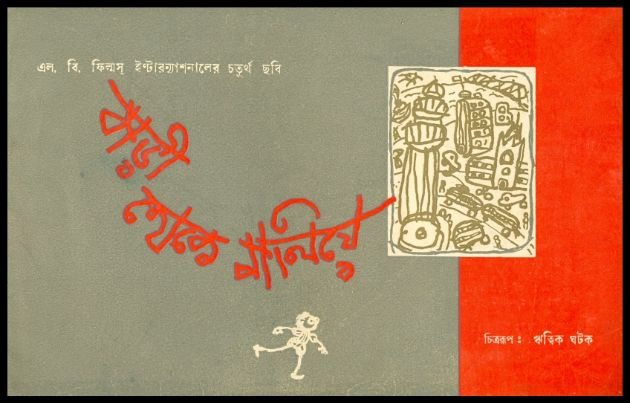
KB: 2001: A Space Odyssey, Baari Theke Paliye, Foxcatcher, The Last Emperor.
Film(s) you’d take to a desert island — and what it rescues you from:
KB: 2001: A Space Odyssey. It rescues me from the banality of my own life.
A cinematic tradition you feel closest to (Indian parallel / European art-house / New Hollywood)?
KB: No idea.