Abhinav Jain
(This article contains spoilers for the films: Homebound, Masaan, and All We Imagine as Light)
My movie-going ritual is simple: I go to the movies on the Saturdays I get my bike serviced. I drop the bike, take a shared auto to the mall with an INOX or PVR, and watch a film while the servicing happens. This is why my bike often has to wait for a truly good movie to be released in my small town before it gets its oil changed. I went to see Homebound on one such bike-servicing-Saturday. I was genuinely excited to watch Homebound after the news of its nine-minute standing ovation at Cannes. I’m usually wary of festival reception; they are often dubious – remember that 14-minute standing ovation for Blonde (2022)? But with the Neeraj Ghaywan stamp on the film, I was much more confident. Martin Scorsese joining as an executive didn’t hurt either. I also purposefully avoided reading Basharat Peer’s original opinion piece before seeing the film.
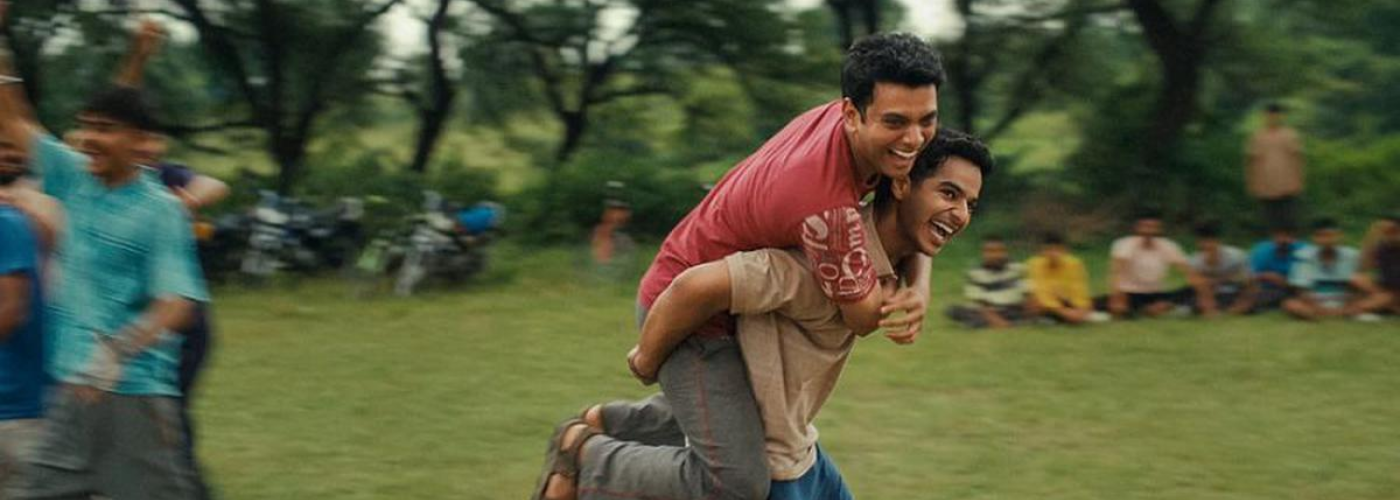
The film opens with Shoaib and Chandan at a railway station, en route to their allotted exam center for the National Police Exam. They watch a constable beat young men with a lathi and dream of wielding such power one day. But their desire is not for brute force but for respect.
Respect would mean they can no longer be ignored by the society that has treated them like shadows.
Enter Sudha Bharti (Janhvi Kapoor). When Chandan asks if she’s come with her parents, she starts by messing with him (“tumko chhed rahe the”) – a remarkably out-of-character move for a lone small-town girl on a railway platform packed to the brim with young men. She then shoots back: “Papa motivation ka pudiya bana ke khila rahe the, hum bhaga diye” (“My father was trying to motivate me, so I told him to go back”). It was the first moment in the film that I felt myself taken out of the film. The punchline felt jarringly out of place; after the grounded realism of Shoaib and Chandan’s opening, this dialogue and her unnecessarily bold demeanour landed as a forced attempt at “easy cool,” feeling more like a mechanical performance than a genuine reaction from the character.
These first 15 minutes highlight the film’s essential struggle: it’s incredibly realistic and rooted when focused on the two boys and their friendship, but whenever it shifts focus to secondary characters like Sudha Bharti or attempts at heavy-handed social commentary, it plays like a parody. Take the scene where Chandan and Shoaib play a cricket match for a cash prize. When Shoaib refuses to leave the crease after being given a run-out, the opposition attacks him for being a Muslim. This is the film’s attempt to show the discrimination Muslims face in India, only it is extremely surface-level. While the scene may be read as a necessary rebuttal to the myth that cricket unifies all Indians, its dramatization rings false. Even Peer in the original article notes that interfaith friendships are common. Ask anyone who has grown up playing local cricket and they’ll tell you: when tempers flare, the insults are almost always about your game, not your faith. That competitive insult cuts deeper than any external slur.
This lack of realism is striking because the film is capable of capturing subtle bias elsewhere. For example, Chandan notes with frustration that the Man of the Match trophy is always handed to upper-caste players. That single line quietly captures how caste bias operates within an everyday setting. Similarly, another sharp example plays out at Shoaib’s workplace, when an upper-caste HR, upon hearing his name, quietly tells him not to fill his water bottle. That subtle dig lands. The scene is devastating precisely because the cruelty is disguised as procedure; it forces the audience to lean in and recognize the casual, systemic nature of caste discrimination that operates through quiet exclusion. Such moments, played out in whispers rather than shouts, capture the real texture of how these social evils unfold. But instead of trusting such restraint, the screenplay doubles down. The treatment of Islamophobia and casteism in the film feels laboured, not because these oppressions aren’t real, but because the dramatization flattens them into neat, scripted confrontations, hammering the point until all nuance evaporates. It is all the more striking given that Ghaywan himself, as a Dalit filmmaker, has a personal connection to these realities.
If the screenplay strains credibility, one might hope dialogue redeems it. But here lies the film’s heaviest burden. Written by Varun Grover and Neeraj Ghaywan, who previously collaborated on Masaan, the lines often sound like Varun Grover speaking through his characters, giving them an eloquence and theatrical profundity belonging more to the screenwriter than to these individuals. There is a scene where Shoaib is asked why he doesn’t just leave the country. Shoaib’s reply is a prose-like monologue that includes everything from his mother’s coriander chutney made on the sil-batta (a grindstone) to the air carrying the scent of his ancestors. Beautiful in isolation but no young lower-class man from UP speaks this way. These dialogues repeatedly weigh the scenes down. Another example is the confrontation between the two men, where they simply hurl overblown insults at each other without any genuine emotional build-up in the scene.
Compare this to the dialogues of Masaan: after Deepak loses his love to an accident and as a result fails to focus on getting the job he prepared tirelessly for, he sits among his friends and howls in grief, shouting through tears: “Ye saala dukh khatam kahe nahi hota hai?” (Why doesn’t this sadness end?). It is so simple, yet so effective. Even when Deepak recites shayari to Shaalu, it is shown that he is not very good at it, with her laughing at him. Homebound provides no real explanation for its characters speaking in a language that can only be described as Varun-Grover-standard-profound. The first half of the film fails to understand that a film can be poetic even if the characters do not speak poetry – something the film’s successful second half proves. The burden of the first half is that Shoaib is always Shoaib the Muslim, and Chandan is always Chandan the Dalit. Their identities never expand beyond the labels stamped on them; they are written more as categories than as characters. This is why the dialogue feels so heavy – every line bends toward announcing their identity rather than letting it breathe.
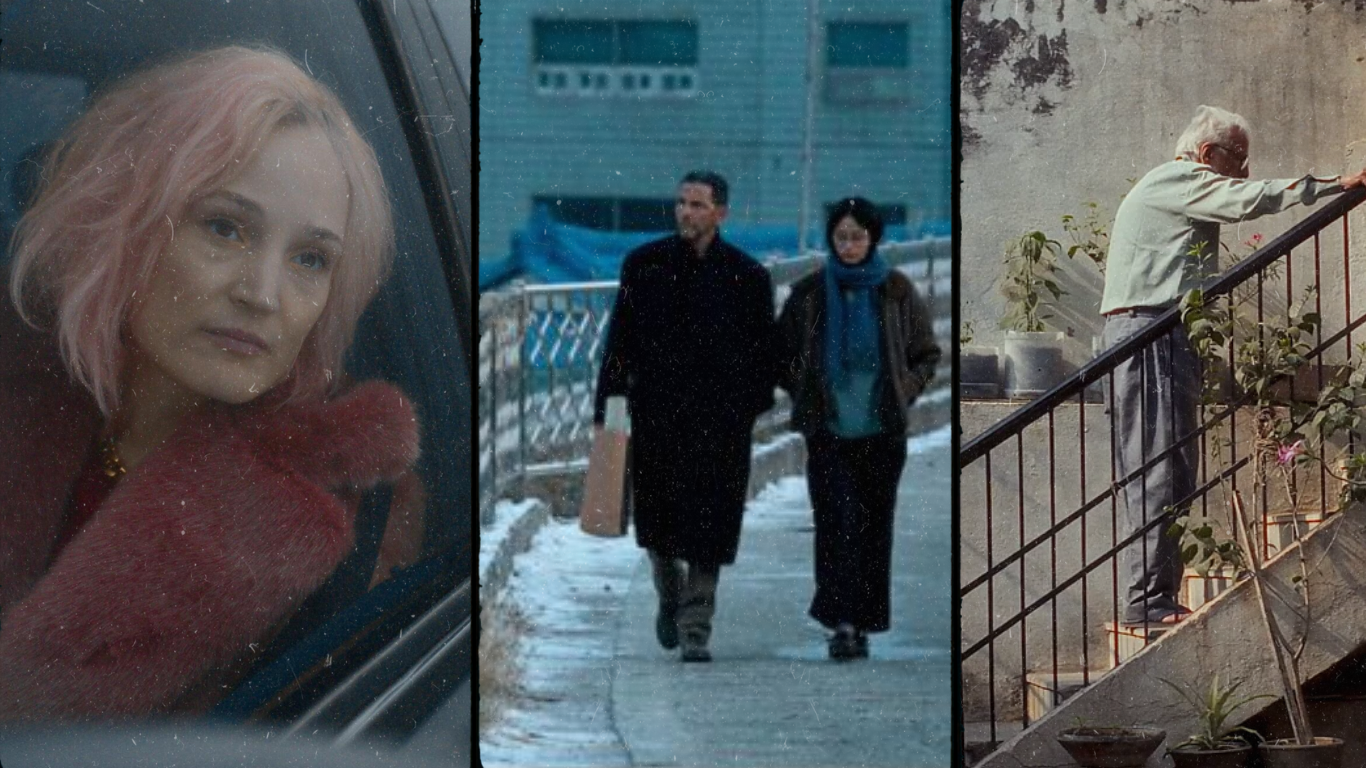
Since the film is India’s official entry to the Oscars, it is only fair to mention Payal Kapadia’s critically acclaimed All We Imagine As Light, controversially overlooked by the same committee last year. In a moment when Parvathy’s life is collapsing, she quietly tells Prabha, “gayab bhi hojao to kisi ko pata nahi lagega” (Even if I disappear, no one will notice). The line devastates precisely because of its restraint. We have all felt that way. Now imagine if she had instead launched into something like, “I’m not here, I’m not here. Strobe lights and blown speakers. Fireworks and hurricanes. I’m not here, this isn’t happening.” That would have been poetry straining to prove itself, rather than a truth whispered in passing.
The last 40 minutes of Homebound are what we expect from Neeraj Ghaywan: restrained, visual, alive with silences. Unsurprisingly, the fewer the dialogues, the better the film breathes. I must mention what, for me, was the most devastating scene of the film, and perhaps the one that moved me to tears more than any other I have witnessed in a theatre. Chandan, reeling from a heatstroke, collapses and is revived when a woman offers him water. As his gaze falls on her coarse, weathered feet, he is suddenly reminded of his mother’s feet and the lifelong struggles etched into them. In that instant, I thought of my own mother, her rough feet, and the battles she has carried silently through her life. Not a single word is spoken in the scene, yet Chandan’s emotion is unmistakable and universally understood.
This brings me to the core of my argument: Homebound will be appreciated far more abroad than at home. Watching it, I found myself gazing repeatedly at the bottom inch of the screen, at the English subtitles. Translated by Jahan Singh Bakshi, they felt natural, believable. The translation inadvertently acts as a crucial filter: the self-conscious, theatrical prose of the Hindi dialogue – which native speakers recognise as “overly literate” for a young man from UP – is smoothed into succinct, dignified English equivalents. Take these examples: the contrived Hindi “Khud ki kadar karne ko swarthi mat bolo” (Don’t call valuing yourself selfish) becomes the straightforward, universally powerful “Never apologise for your values.” The equally dramatic “Purkho ne sar pe hath fer diya” and “khairat me meva nahi bat raha hai” are simply rendered as “ancestor’s blessings” and “no one’s doing us favours,” respectively. And the heavy-handed “asli naam bata te hai to log humse dur hojate hai, jhootha naam batate hai to hum apne aap se dur ho jate hai” translates simply to a clear crisis of identity: “If I say my name people look down on me, if I hide it, I look down on myself.” Because foreign audiences lack the linguistic context to detect the original dialogue’s forced literary quality, the English subtitles feel authentic, making the story genuinely moving. This, perhaps, explains why it is India’s Oscar entry this year, and why Scorsese found it worth championing. Homebound is a good film that could have been great. The final act deserved a sturdier first half. It has flashes of brilliance, but also dialogue so self-conscious it trips over its own message. At home, the cracks show; abroad, smoothed by translation, it may well shine.